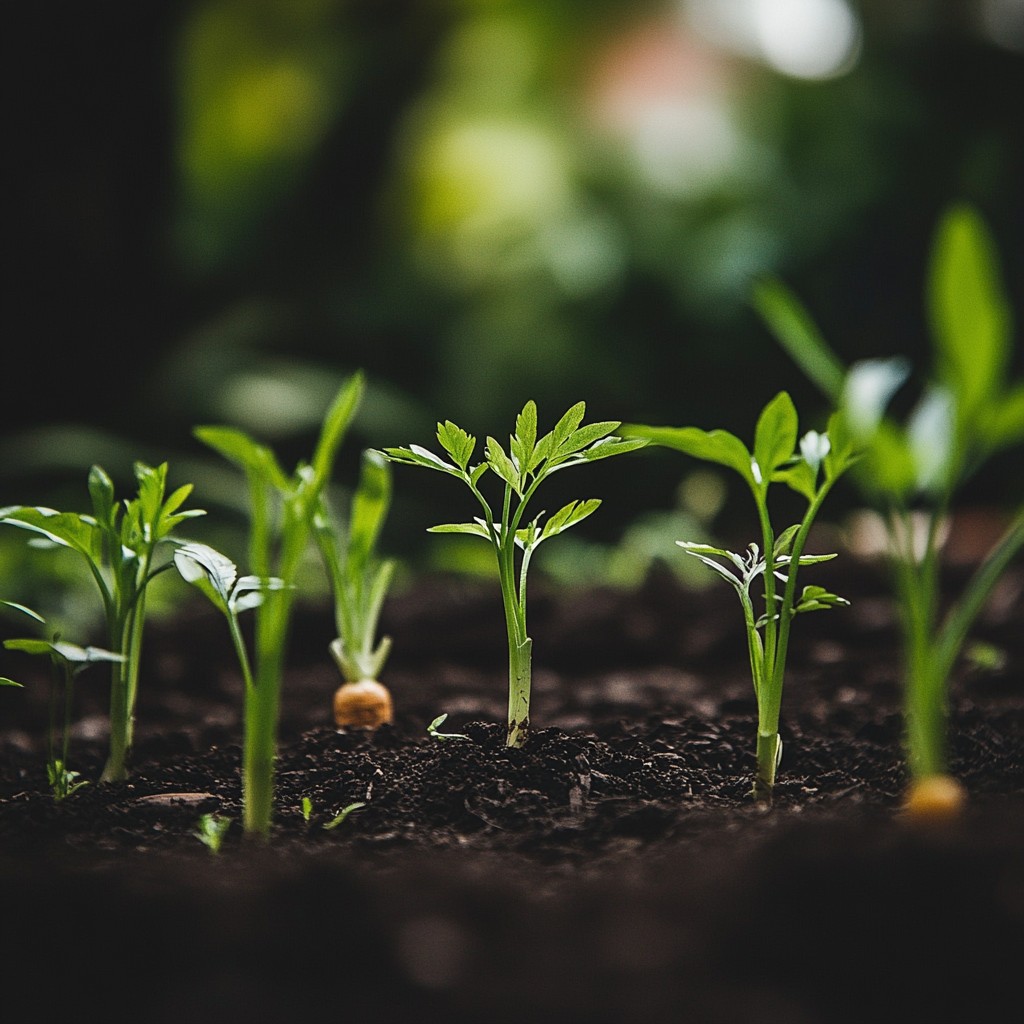
Carrots
Learn how to grow crispy and sweet carrots with proper soil preparation and seeding techniques.
With the right soil preparation, sowing techniques and care, you can grow crispy, sweet carrots that are full of flavour in the Dutch climate. Learn how to keep the soil airy, limit weeds, water regularly and choose the right location so that your harvest remains healthy, tender and rich in colour throughout the growing season, from the first moment of sowing to the moment you pull the carrots from the ground.
Preparation and cultivation
Prepare soil for carrots
Start with loose, deep soil without stones or clods so that the roots can grow straight. Dig the soil to a depth of at least 25 centimeters and mix in some fine sand or compost to make the structure airy. Avoid fresh manure as it can cause the roots to branch. A pH between 6 and 7 is ideal. Work the soil in early spring so it can rest and warm up before sowing. This way you create a healthy basis for strong, straight carrots.
Sow at the right time
Sow carrots directly in the open ground as soon as the temperature rises above 8 degrees, usually from March to early July. Make shallow trenches about one centimeter deep and keep a distance of about 20 centimeters between the rows. Sow thinly to limit thinning later. Cover the seeds lightly with soil and press gently. Keep the soil moist but not wet. By sowing in phases you can harvest fresh carrots until autumn.
Emergence and caring for young plants
The first seedlings will appear after one to three weeks. Keep the soil evenly moist and remove weeds carefully so as not to damage the delicate rootlets. Thin the seedlings to about two inches apart once they are several inches high. This prevents the carrots from growing too close together and warping. Protect young plants against carrot fly by using fine insect mesh. This way you give the young carrots a healthy start.
Planting and care
Plant out in loose soil
Carrots like airy, deeply loosened soil without stones or clods. Plant the young seedlings or thin out the rows when they are a few centimeters high, so that each root has enough space to develop. Keep a distance of about five centimeters between the plants and press the soil lightly. In the Dutch climate, mid-April to early June is ideal for planting, provided the soil is not too wet. This way you prevent crooked roots and promote even growth.
Watering and fertilizing
Water carrots regularly, especially during dry spells, but avoid allowing the soil to become soggy. An even moisture content prevents cracks and ensures a soft texture. Do not use fresh manure as it can cause the roots to branch. A light compost application in the spring is sufficient. In summer you can loosen the soil around the plants slightly to limit evaporation. This way the carrots remain juicy and continue to grow quietly until harvest time.
Control weeds and diseases
Keep the bed weed-free, especially in the first weeks after planting out, so that the young roots are not crowded out. Pull weeds by hand or use a hoe in dry weather. Be aware of carrot fly, a common pest in the Netherlands; protect the plants with insect screen or plant onions nearby to mask the odor. By regularly checking and airing in humid weather, you prevent fungal problems and the carrots remain healthy and strong.
Harvest and store
When to harvest carrots
Carrots are ready to harvest when the shoulders become visible above the ground and have a beautiful orange colour. In the Netherlands this is usually from July to October, depending on the sowing time. Don't prepare them too early, because they will still be thin and less sweet. Use a spading fork to loosen the soil and gently pull up the carrots. Harvest in dry weather to prevent the carrots from becoming muddy and allow them to dry briefly before removing the foliage.
Clean and dry carrots
After harvesting, remove the foliage approximately two centimeters above the root to limit moisture loss. Shake off excess soil, but only wash the carrots just before use to prevent mold formation. Let them dry for a few hours in an airy, shady spot. Check for damaged ones and use them first. By allowing the carrots to dry thoroughly, you extend their shelf life and they remain firm and tasty.
Storing carrots in winter
For long-term storage, you can store carrots in a box with slightly damp sand or peat in a cool, dark place, such as a cellar or shed. The temperature should not autumn below freezing, but also not above ten degrees. Check regularly for rotten specimens and remove them immediately. Carrots will also keep well in the refrigerator for several weeks in a perforated bag. This way you can enjoy your own harvest well into the winter.
Fine-mesh carrot seeder
A practical tool that allows you to distribute carrot seed evenly in the sowing trench, so that the plants do not grow too close together and you have to thin out less later. Ideal for straight rows, an even emergence and healthy growth in the Dutch kitchen garden, even in changing weather conditions.
View productAiry kitchen garden soil for carrots
Specially formulated soil with a loose, airy structure and excellent drainage, allowing carrots to grow straight and long without branching. This soil is suitable for both sandy and clay soils and helps prevent compaction, which is especially useful in wet Dutch conditions and fluctuating temperatures.
View productInsect mesh against carrot fly
Fine-mesh insect mesh that prevents carrot flies from laying eggs on your plants. It protects young carrots without blocking light and is easy to place over beds or tunnels. Ideal for organic cultivation in the Dutch kitchen garden and reusable for several seasons.
View productRecipe inspiration

Easy carrot cake
Top this classic carrot cake with moreish cream cheese icing and chopped walnuts or pecans. Serve as a sweet treat with a cup of tea any time of the day.
View recipe
Carrot cake
Delight friends with an afternoon tea that includes this easy carrot cake. You can bake the cake, freeze it and just drizzle over the icing on the day
View recipe
Carrot cake cupcakes
This crowd-pleasing recipe turns an afternoon tea classic into dainty cupcakes. Top mini carrot cakes with a generous layer of soft cheese frosting, then enjoy with a cuppa.
View recipe