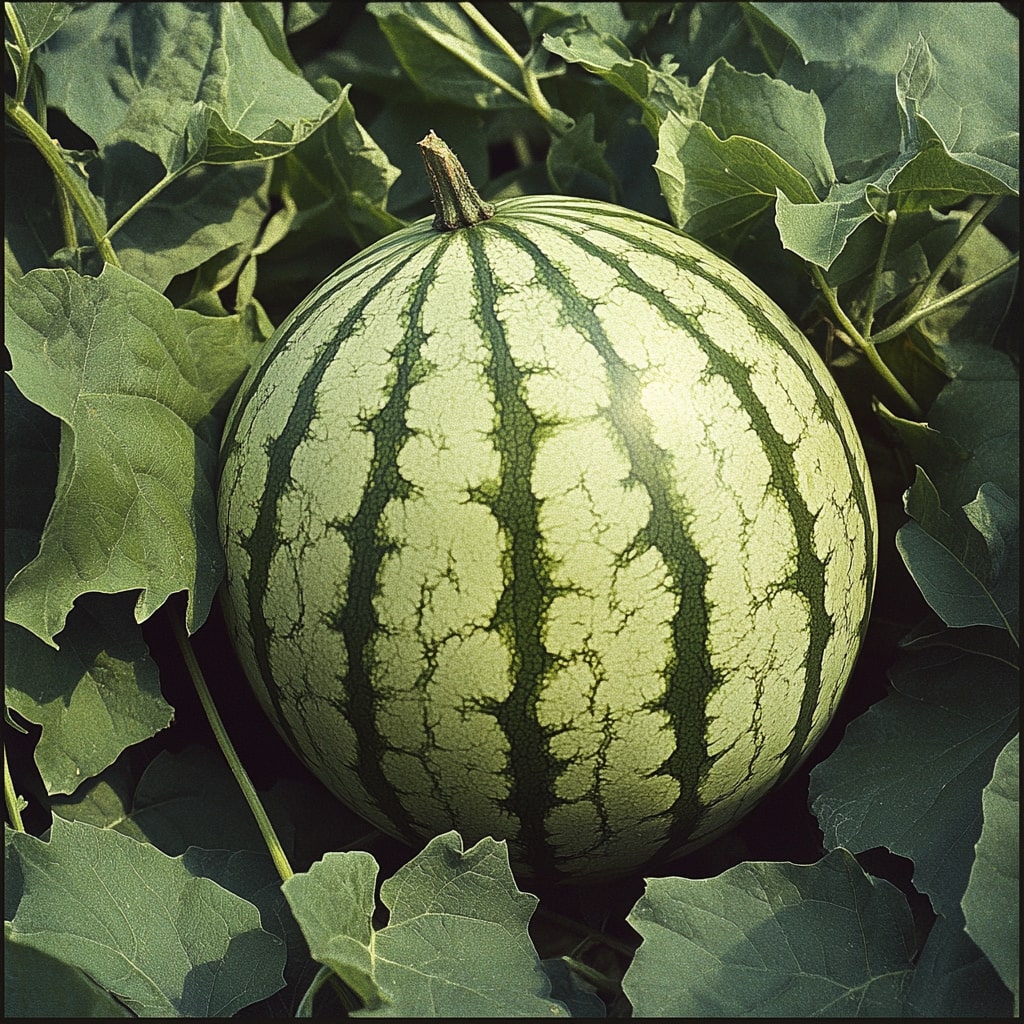
Watermelon
Learn how to grow watermelons successfully with proper sowing and care techniques for juicy and refreshing fruits.
With the right care, warmth and protection, you can grow surprisingly good watermelons in the Netherlands. By sowing the seeds indoors early, planting the young plants in a sunny spot and giving them sufficient water and nutrition, you will develop strong vines with juicy fruits. With a little patience and attention, you can enjoy home-grown, refreshing watermelons from your own garden in the summer.
Preparation and cultivation
Select and pre-treat seeds
Choose varieties that perform well in the Dutch climate, such as early-ripening or compact watermelon varieties. Use fresh seeds and soak them overnight in lukewarm water to promote germination. Then sow them in pots with airy seed soil and keep the temperature around 25 degrees. Place the pots on a warm windowsill or in a grow box so that the seeds germinate within a week. As soon as the first leaves are visible, provide careful water and sufficient light.
Sow and grow indoors
Sow watermelons indoors from late March to mid-April so that the plants are strong enough for outdoor cultivation. Use large pots, because the roots grow quickly. Keep the soil moist but not wet and rotate the pots regularly for even growth. Once the seedlings have two true leaves, you can transplant them into larger pots. Provide a light feed every week and provide sufficient light to prevent stretching. This way you grow sturdy, healthy plants.
Harden off and plant out
Start hardening off at the end of May by placing the young plants outside in a sheltered spot during the day and bringing them back indoors at night. After a week or two they get used to the outside temperature. Then plant them in a sunny, warm spot with well-drained soil, preferably in a greenhouse or under a tunnel. Keep sufficient planting distance so that the vines can spread. Water generously immediately after planting and cover the soil with straw or compost to retain moisture.
Planting and care
Choose the right location
When planting watermelons, choose a warm, sheltered spot with full sun and well-drained soil. In the Netherlands, a raised bed or greenhouse is ideal for warming the soil faster. Make sure the soil is rich in compost and organic matter so that the plants receive sufficient nutrition. Only place the young plants outside when the night temperature remains above 12 degrees and there is no longer a chance of frost. This way you give them a strong start for healthy growth.
Care during growth
Watermelons need a lot of water, especially during fruit formation, but avoid wet feet by watering regularly and specifically at the roots. Mulch with straw or grass to retain moisture and suppress weeds. Check weekly for snails and aphids and remove affected leaves. Provide a liquid fertilizer rich in potassium every two weeks for firm fruits. Carefully guide the vines so that they have enough space and do not grow over each other.
Fruit development and support
When the first fruits appear, you can help the plant by limiting the tendrils to a few strong shoots. Place a piece of wood or straw under each fruit to avoid contact with moist soil and prevent rotting. In a greenhouse you can support the fruits with a net or cloth. Continue watering regularly, but reduce slightly once the fruits begin to ripen. This makes them sweeter and fuller in taste, perfect for a summer harvest.
Harvest and store
When is the watermelon ripe?
You only harvest a watermelon when it is fully ripe, because it does not ripen further after picking. Look for a dull skin, a yellow discolored underside and a hollow sound when tapping. The vine on which the fruit grows often begins to wither, which is a clear sign of ripeness. In the Netherlands, the harvest usually takes place in August or September, depending on the weather and location. Harvest on a dry day to prevent mold formation and enjoy the full, sweet taste of a perfectly ripe fruit.
Harvest without damage
Use a sharp knife or pruning shears to cut the watermelon from the plant, leaving a few inches of stem attached. Lift the fruit carefully, as the skin can easily crack if bumped. Do not place the harvested melons in full sun, but let them cool in a shady spot. Check each fruit for damage and use those first. By harvesting carefully you maintain the best taste and shelf life, which is especially important in the changeable Dutch climate.
Store and enjoy
Watermelons are best stored in a cool, dry place, but not in the refrigerator while they are still whole. A temperature around 10 to 15 degrees is ideal to preserve the taste. After cutting, you can keep the pieces refrigerated, well covered to prevent them from drying out. Eat the melon within a few days for the best flavour. In the Netherlands it is useful to grow smaller varieties, so that you can eat them in one go without having to save leftovers.
Watermelon seeds for cool climate
Choose a variety that performs well in the Dutch climate, such as an early maturing type with compact growth. These seeds germinate quickly in warmth and produce juicy, sweet fruits if given enough sun, nutrition and moisture. Ideal for cultivation in a greenhouse or in a sheltered spot in the open ground, where the temperature remains stable.
View productMini greenhouse or growing box with lid
A mini greenhouse helps to germinate watermelon seeds indoors early in the season. The transparent lid retains heat and moisture, allowing the young plants to grow strong and healthy before going outside. Handy for windowsill or greenhouse use in spring and reusable for other crops.
View productOrganic fertilizer for fruit crops
Use a slow-release, organic fertilizer to support the growth of watermelon plants. This food promotes strong vines, good fruit set and rich flavour development without the risk of root burn. Suitable for organic cultivation in a greenhouse or garden and easy to dose during the growing season.
View product