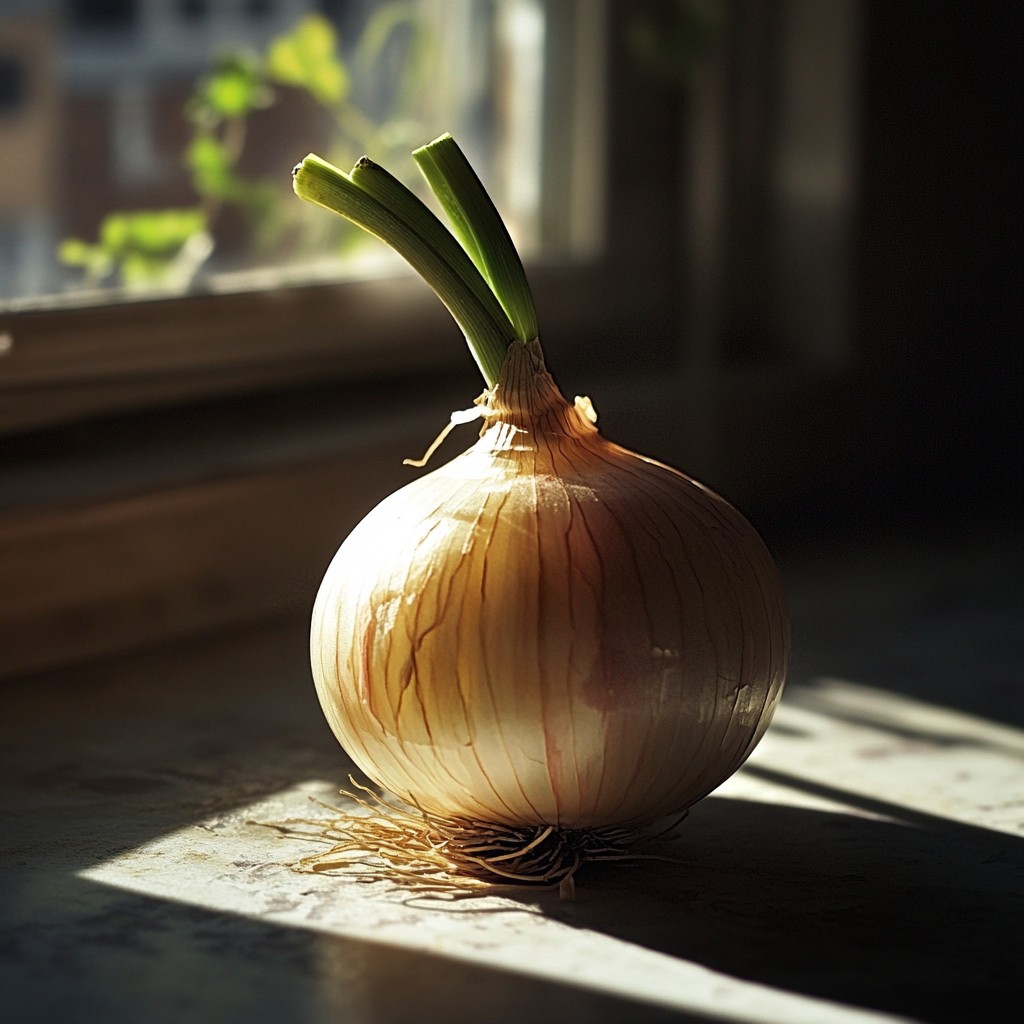
Onion
Discover how you can grow sturdy and tasty onions for your kitchen with the right soil preparation and sowing tips.
Growing onions in the Netherlands requires well-prepared, loose soil and sufficient sun, so that the bulbs become firm and tasty. By planting early, weeding regularly and watering moderately, you prevent diseases and get a bountiful harvest. With some attention to fertilization and timely drying of the harvested onions, you can enjoy your own supply for months.
Preparation and cultivation
Prepare soil for strong onions
Start with a light, well-drained soil that is rich in organic matter. Dig the soil in autumn or early spring and remove stones and weeds. Mix some compost or well-decomposed manure into the top layer to improve the structure. Onions like a neutral to slightly alkaline pH, so add some lime if the soil is acidic. A flat, crumbly seedbed ensures that the young roots can develop quickly and the bulbs grow firmly.
Sowing and growing onion onions
Sow onions indoors from February in shallow containers with sowing soil or use onion onions in the open ground from March. Keep the temperature around 15 degrees and water moderately so that the soil remains moist but not wet. As soon as the seedlings are pencil thick, you can harden them off and plant them out. Plant the onions with the tip just above the ground and leave enough space between the rows for air circulation and easy care.
Care during growth
Keep the onion bed weed-free, because competition for light and nutrition inhibits bulb formation. Only water during prolonged drought and avoid wet feet to prevent mold. A light fertilization with potassium helps with firm bulbs, but nitrogen must be limited to avoid soft growth. Check regularly for onion fly and remove affected plants immediately. Keeping the soil loose and allowing the plants to dry thoroughly after rain will promote healthy, sturdy onions.
Planting and care
Planting out young onions
Plant out the young onions as soon as the soil has warmed up properly in the spring and no longer feels too wet. Keep a distance of about ten centimeters between the plants so that the bulbs have enough room to grow. Press the soil lightly around the base and water immediately to help the roots adhere well. Choose a sunny spot with airy, fertile soil and avoid places where leeks or garlic previously grew to prevent diseases.
Watering and fertilizing
Onions need an even moisture supply, especially in dry periods. It is better to water generously once a week rather than small amounts often, so that the roots grow deeper. Over-fertilizing with nitrogen can lead to soft bulbs that are less well preserved, so use a moderate dose of compost or organic fertilizer. Keep the soil loose and weed-free, as competition for nutrients inhibits growth.
Prevent and care for diseases
Check regularly for onion fly and fungal diseases, especially in humid weather. Remove affected plants immediately to prevent spread. An airy location and crop rotation help to limit problems. Allow the foliage to die back slowly towards the end of the season, this is a sign that the bulbs are ripe. Then carefully pull the onions out of the ground and let them dry in a warm, ventilated place.
Harvest and store
When onions are ready for harvesting
Onions are ready to harvest when the foliage begins to autumn and turn yellow, usually in July or August. Carefully pull the bulbs out of the ground on a dry day and let them dry in the field for several hours. Avoid damaging the peel, as this shortens the storage time. Check whether the neck has dried thoroughly before bringing the onions inside to prevent mold formation during storage.
Drying and curing onions
After harvesting, proper drying is essential for a long shelf life. Place the onions in a single layer in an airy, dry place, for example under a roof or in a well-ventilated shed. Leave them there for two to three weeks until the outer shell is paper dry. Then cut the foliage to a few centimeters above the bulb. This process hardens the onions and keeps them firm and tasty.
Storing onions in the house or shed
Store fully dried onions in a cool, dark, and well-ventilated place, such as a basement or shed. Use wooden boxes, mesh bags or braid the onions into strands to promote air circulation. Check regularly for rotten specimens and remove them immediately. Avoid plastic bags, as they create too much moisture. At a temperature of around 5 to 10 degrees, the onions will last for months and retain their full flavour.
Planting onions Sturon
Strong and reliable onion onions that are highly resistant to the Dutch climate. They form firm, golden yellow onions with a full flavour and are ideal for planting in early spring. With good storability and high yields, they are a favorite with both hobby gardeners and experienced vegetable gardeners.
View productOrganic onion fertilizer
Slow-release fertilizer that ensures even growth and firm bulbs without excessive leaf development. This natural food improves the soil structure and stimulates soil life, resulting in healthy plants and a rich harvest. Suitable for organic cultivation and easy to mix with the soil when planting.
View productOnion drying rack with ventilation
Practical drying rack that allows harvested onions to harden and dry properly, so that they last longer. The open structure ensures optimal air circulation in the shed or greenhouse, preventing mold formation. Light, stackable and easy to move for efficient use during the harvest period.
View productRecipe inspiration

French onion soup
Our French onion soup is deliciously rich and easy to make at home. This savoury soup is perfect for using up a garden glut and great for dinner parties
View recipe
Next level French onion soup
Supercharge every element of this Gallic classic soup. From jammy caramelised onions to golden cheesy croûtes, this recipe takes the dish to new heights
View recipe
Cider & onion soup with cheese & apple toasts
Make Tom Kerridge's version of French onion soup. Use any cheese you have in the fridge for the toasts – a crumbly goat's cheese works well
View recipe