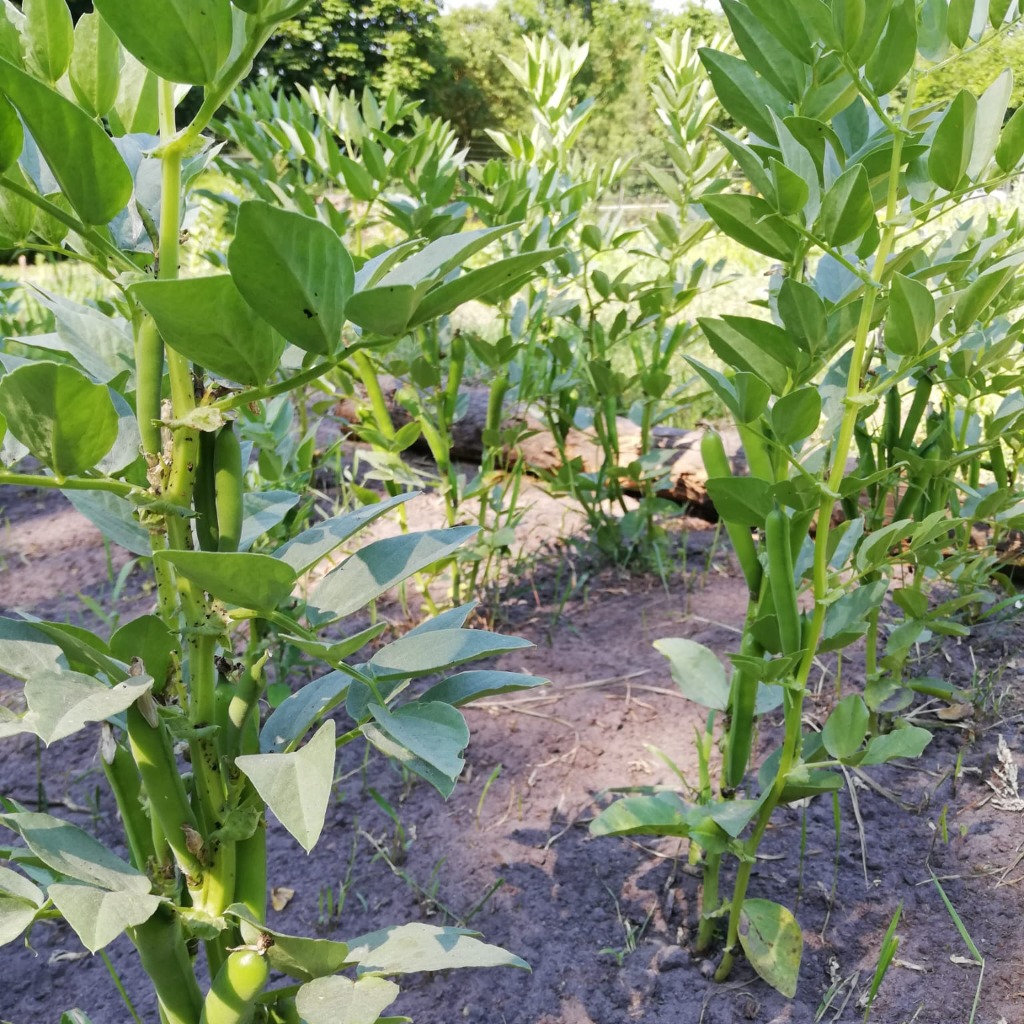
Broad beans
Grow your own nutritious and tasty broad beans in your kitchen garden, greenhouse or greenhouse and enjoy a sustainable harvest packed with nutrients.
Broad beans are a delicious and nutritious addition to the kitchen garden and grow excellently in the Dutch climate. With the right care, they deliver a rich harvest full of proteins and fiber. Sow them early in the spring, provide plenty of water and support in strong winds. This way you can enjoy fresh, tasty pods that can be harvested both young and fully grown and contribute to a sustainable, healthy meal from your own garden.
Preparation and cultivation
Soil preparation and location
Broad beans grow best in a sunny spot with nutritious, well-drained soil. In winter or early spring, dig the soil and work in some compost or well-rotted manure. Avoid fresh manure, as it stimulates leaf growth at the expense of the pods. A pH between 6 and 7 is ideal. Make sure the soil does not remain too wet, because broad beans cannot tolerate wet feet for long periods of time. An airy structure promotes a strong root system and healthy growth.
Sow and propagate indoors or outdoors
You can sow broad beans indoors in pots or trays from February, or directly outdoors in the open ground from March. Growing indoors gives an advantage and protects against cold and birds. Use firm seeds and plant them about 5 cm deep. Keep the soil moist but not wet. As soon as the young plants are 10 to 15 cm high and the frost has passed, they can be planted out. Place them 20 cm apart in rows with 40 cm apart.
Care of young plants
After planting out, it is important to properly support the young broad beans and protect them from wind. Place bamboo sticks or wire along the rows to prevent falling over. Keep the soil free of weeds and water regularly, especially during dry periods. Mulching with straw or compost helps retain moisture and suppress weeds. Check for black bean aphid and remove affected buds in a timely manner. This way the plants develop strong and healthy, ready for rich flowering and pod formation.
Planting and care
Plant out in the open ground
When the young broad bean plants are about 10 to 15 centimeters high and there is no longer a chance of night frost, they can be planted outside. Choose a sheltered spot with sufficient sun and plant them 20 to 25 centimeters apart in rows of 40 to 50 centimeters. Press the soil well around the roots and water immediately. By placing the plants a little deeper than they were in the pot, they develop extra roots and are sturdier in windy conditions.
Support and protection against wind
Broad beans grow quickly and can be sensitive to wind due to their height. Therefore, place stakes or rope guides along the rows in a timely manner to prevent falling over. In open gardens, a mesh windbreak or low hedge helps to limit damage. Check regularly whether the support is still sturdy and tie the plants loosely. A stable plant grows more evenly and forms more pods, which benefits the final yield.
Watering and maintenance during growth
Keep the soil around the broad beans moist but not soggy, especially during flowering and pod formation. It is better to water generously once a week rather than small amounts often. Remove weeds carefully so as not to damage the roots and lightly rake the soil to prevent compaction. Once the first pods form, you can pinch off the top of the plant to repel aphids and direct energy to the pods for a richer harvest.
Harvest and store
The right time to harvest
Broad beans are ready to harvest when the pods feel firm and the beans are clearly visible through the skin. In the Netherlands this usually falls between the end of June and August, depending on the sowing time. Pick the pods regularly to stimulate the plant to form new flowers and pods. Harvest in dry weather to prevent mold formation and use sharp scissors or a knife to avoid damaging the stems. This way you maintain healthy plants and a longer harvest period.
Process fresh or store briefly
After harvesting, it is best to shell and process broad beans as quickly as possible, because they quickly lose their sweet taste. Store unshelled pods for no more than a few days in the vegetable drawer of the refrigerator, wrapped in a damp cloth. Shelled beans can be blanched briefly and then rinsed with cold water to retain their colour and flavour. They will keep for a few days and are ideal for salads or hot dishes.
Freeze and dry for longer shelf life
If you want to enjoy your harvest for longer, freezing or drying is an excellent option. Blanch the shelled beans for two minutes, cool them quickly and freeze them in portions. This way they stay fresh and full of nutrients for months. To dry, allow the pods to fully ripen on the plant until they are brown and crisp, then remove the beans and store them in a dry, airy place. Dried broad beans are perfect for winter stews.
Broad bean seeds early varieties
Choose an early variety of broad bean seeds that can withstand the Dutch spring, so that you can sow from February or March. These varieties germinate quickly at lower temperatures, produce sturdy plants with full pods and ensure an early harvest that suits the changeable Dutch climate.
View productBamboo sticks or plant supports
Use sturdy bamboo stakes or metal supports to support broad beans from wind and rain. When planting out, place them in place, tie the stems loosely and check regularly that the plants are still firmly attached so that they continue to grow straight up and do not autumn over in strong winds.
View productInsect mesh or net against lice
Protect young broad bean plants with fine insect mesh to ward off black bean aphid and other pests. The mesh allows light, air and rain to pass through but prevents insects from damaging the buds, keeping the plants healthier and yielding noticeably higher during the Dutch growing season.
View productRecipe inspiration

Tomato, burrata & broad bean salad
Chop up tomatoes, toss with salt, top with creamy burrata and slather with a broad bean-flecked salsa verde to make this simple yet super-tasty salad
View recipe
Fennel, pomegranate & broad bean salad
This bulgur wheat and chopped herb salad makes a scrumptious side to take to a picnic - drizzle the dressing over before serving
View recipe
Bulgur & broad bean salad with zesty dressing
A light salad with plenty of green vegetables, a chilli lime dressing, fresh mint and grains to pack into a lunchbox
View recipe