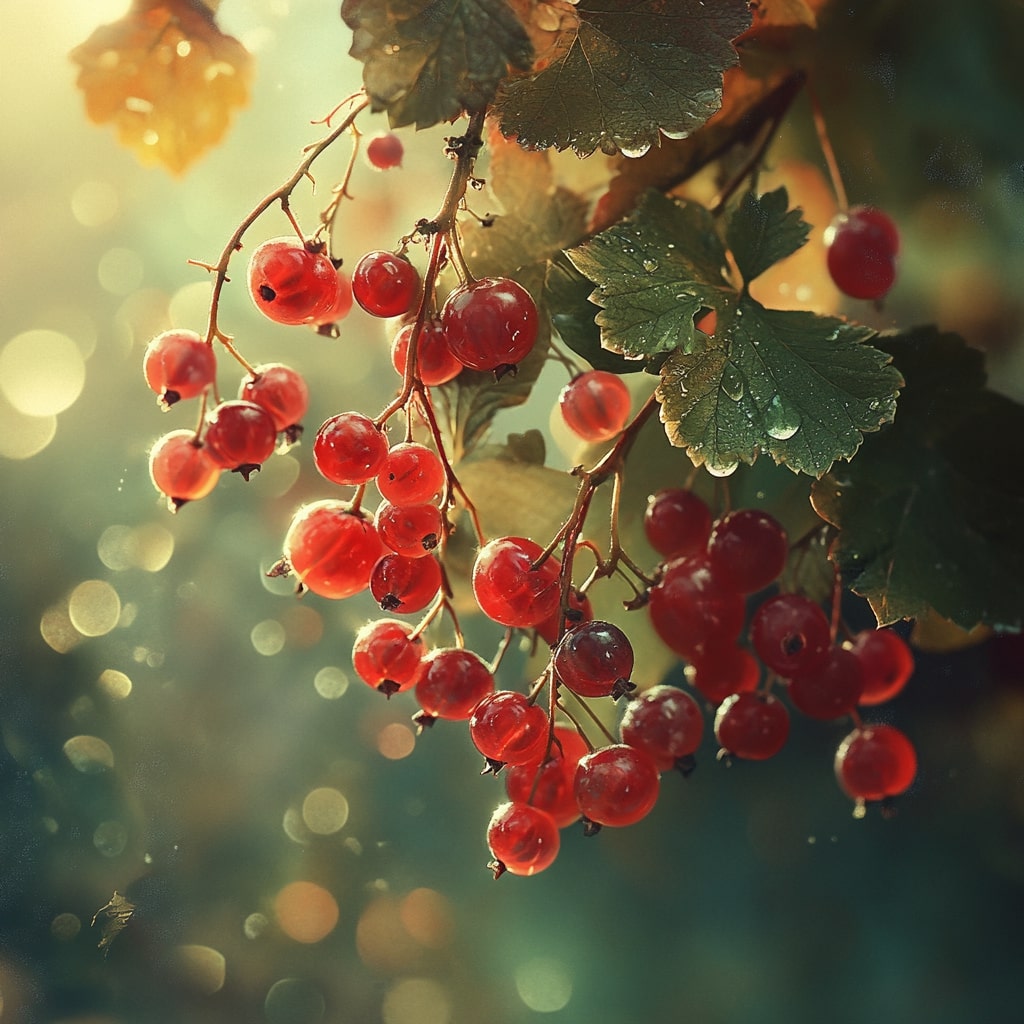
Red Berries
Learn how to successfully grow red currants with the right sowing and care techniques for tasty fruits in your garden.
Red currants bring colour and life to the summer garden with their fresh, sour taste; With the right location, pruning and care, you can enjoy a rich harvest of shiny berries year after year that are perfect for jam, juice or as a fresh addition to desserts, while the shrub itself also forms a graceful eye-catcher among the greenery and attracts bees and butterflies.
Preparation and cultivation
Soil preparation for healthy shrubs
Red currants like airy, humus-rich soil with a slightly acidic to neutral pH. Dig the soil well in autumn or early spring and work compost or well-rotted manure through it to improve the structure. Avoid wet areas where water remains, as this promotes root rot. A mulch of leaves or straw helps retain moisture and suppress weeds, giving the young plants a strong start.
Growing cuttings and young plants
The easiest way to propagate red currants is via stem cuttings in late winter. Cut healthy, pencil-thick branches of about eight inches and stick them in potting soil or directly in the ground. Keep the cuttings moist but not wet and place them in a sheltered spot. In the spring, roots and new shoots form. As soon as the young plants are well rooted, they can be planted out in their final location.
Choose the right location
Choose a sunny to semi-shady spot for red berries, preferably sheltered from strong winds. The more sun, the sweeter the berries become, but too much drought can inhibit growth. Plant the shrubs with sufficient space between them so that air can circulate properly and fungal diseases have less chance. Avoid areas where currants or gooseberries previously grew to prevent soil fatigue. A well-chosen location lays the foundation for a healthy, productive shrub.
Planting and care
When to plant red currants
Plant young redcurrant bushes in early spring or autumn, when the soil is still moist but not frozen. Choose a sunny spot with airy, humus-rich soil and keep sufficient distance between the shrubs so that air can circulate properly. Press the soil firmly around the roots and water immediately. A mulch of compost or straw helps retain moisture and suppress weeds, which promotes growth in the first year.
Care during the growing season
Keep the soil evenly moist, especially during dry spells, as redcurrants have shallow roots. Give a light dose of organic fertilizer or compost in the spring to stimulate growth. Remove weeds regularly and check for aphids or berry moth. Tie up long shoots carefully to prevent breakage. By pruning spent branches after harvest, the shrub remains airy and productive, which improves the quality of the berries.
Pruning and maintenance for lasting harvest
In winter or early spring, prune away old branches that are more than three years old to give space to young shoots. Leave a few strong main branches per shrub and remove weak or crossing branches. This promotes light and air circulation, making mold less likely. Amend the soil annually with compost and check the shrub for damage. With regular pruning and feeding, the redcurrant bush will remain vital and rich-bearing for years.
Harvest and store
Determine the right harvest time
Red berries are ready to pick when they are evenly red and shiny, usually in July or early August. Don't wait too long, because overripe berries lose their fresh taste and quickly autumn off the bunch. Harvest in dry weather to prevent mold formation and use scissors to carefully cut off entire bunches. This way the berries remain firm for longer and you prevent damage to the bush, which benefits the next harvest.
Handle berries carefully after picking
After harvesting, it is important to keep the red berries cool and not to wash them until just before use. Remove damaged specimens and arrange the bunches in a single layer on a tray or in a shallow container. Store them in the refrigerator, where they will keep for several days. For larger quantities you can also freeze the berries: first spread them loose on a baking tray, freeze them and then store them in bags.
Store and process for longer enjoyment
Red currants are ideal for processing into jam, jelly or syrup, so you can preserve their fresh taste for months. Before preserving, you can briefly heat the berries with sugar and lemon juice, or mix them with other fruits for a milder taste. Drying or freezing is also a good option. By choosing the right storage method, you can enjoy the summer harvest from your own garden well into winter.
Red currant bush Ribes rubrum
A strong, perennial shrub that thrives in the Dutch climate and produces an abundance of fresh, slightly sour berries every year. This shrub is ideal for borders or as an individual plant, requires little maintenance, attracts bees and provides a tasty harvest for years for jam, juice or direct use.
View productOrganic berry fertilizer
Slow-acting, natural fertilizer specially developed for small fruit such as red currants, black currants and gooseberries. Promotes healthy growth, strong root development and rich fruit set without acidifying the soil. Apply in early spring and after harvest for lasting vitality and tasty fruits.
View productFine mesh bird net
Effectively protects ripening red berries and other small fruits from birds without damaging the plants. The fine-mesh net allows sufficient light, air and rain to pass through, is easy to attach over shrubs or a frame and can be reused for several seasons. Ideal for a safe and full harvest.
View product