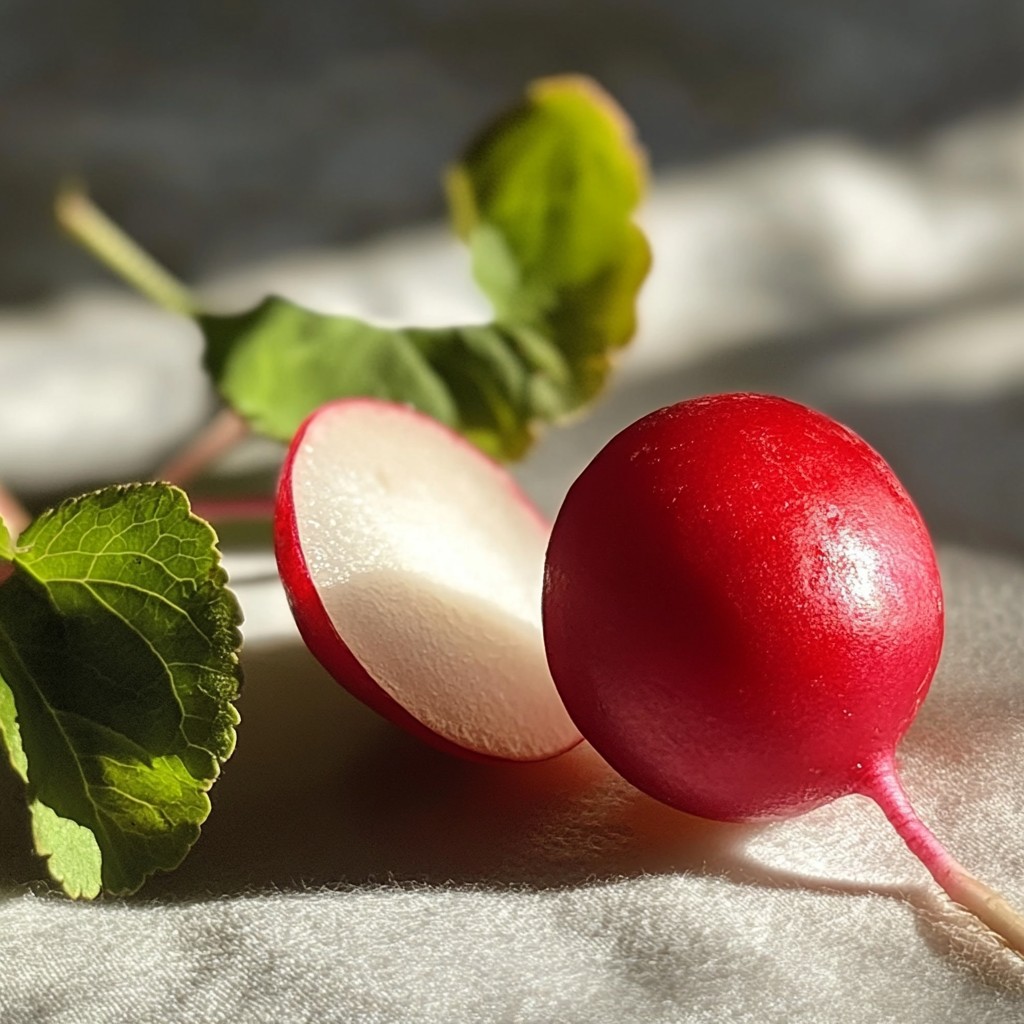
Radish
Learn how to grow fast-growing and crispy radishes with proper soil preparation and sowing methods.
With their spicy flavour and crunchy bite, radishes are a delicious addition to salads and sandwiches. They grow quickly, even in the Dutch spring, and require little maintenance. With the right soil preparation, sufficient moisture and a sunny spot you can harvest within a few weeks. Discover how to grow healthy, fresh radishes bursting with flavour and colour in your own kitchen garden with simple sowing and care tips.
Preparation and cultivation
Prepare soil for rapid growth
Radish likes loose, well-drained soil that is not too rich in nitrogen. Dig the soil lightly and remove stones or clods so that the roots can form unhindered. Mix some compost into the top layer for an airy structure and even moisture distribution. Avoid fresh manure, because it quickly makes the radishes spongy. A pH between 6 and 7 is ideal. Work the bed flat and water if necessary when the soil is dry, so that the seeds can germinate evenly.
Sow in rows or pots
Sow radishes directly outdoors as soon as the soil is workable in early spring, usually from March onwards. Draw shallow trenches about one centimeter deep and keep a distance of two centimeters between the seeds. Cover them thinly with soil and press lightly. This works just as well in pots or containers, provided there are sufficient drainage holes. Place the seed tray in a sunny spot and keep the soil moist but not wet. The first seedlings will appear within five to seven days.
Caring for young plants
Once the seedlings have a few leaves, thin them out, leaving three to five inches of space between each plant. This prevents the tubers from remaining too small or bursting. Water regularly, especially in dry weather, because radishes do not tolerate dehydration. Keep the bed weed-free and check for snails that can eat young leaves. With even growth and sufficient light, the radishes develop quickly and are ready to harvest after three to five weeks.
Planting and care
Plant out at the right time
Radish can be planted outside in early spring once the soil is no longer too wet or frozen. Choose a sunny spot with loose, humus-rich soil and keep sufficient distance between the rows so that the tubers can form properly. Press the soil lightly after planting and water immediately to allow the roots to make contact with the soil. If planted too densely, small or misshapen radishes will develop, so thin out in time for even growth.
Watering and fertilizing
Radish needs an evenly moist base to stay juicy and tender. It is better to water small amounts more often than a lot every now and then, so that the soil does not dry out or soften. Too dry periods make the radish sharp in taste or hollow on the inside. Do not use heavy fertilizer, as that encourages leaf growth instead of tuber formation. A light compost dose when planting out is sufficient for healthy development.
Protection and maintenance
Keep the bed weed-free so that the young radishes are not crowded and receive sufficient light. Protect against cabbage fly and snails with fine mesh or a natural barrier. Check regularly for cracks or dryness of the soil and provide additional water if necessary. Remove damaged plants to prevent the spread of disease. By consistently weeding and aerating the soil remains airy and the radishes grow nice and round and crispy.
Harvest and store
When radish is ready for harvesting
Radishes are usually ready to harvest three to five weeks after sowing, depending on the variety and temperature. Check regularly whether the tubers become visible above the ground and have a nice round shape. Don't wait too long, because overripe radishes quickly become spongy and sharp in taste. Carefully pull the radishes out of the ground in dry weather and remove excess soil by hand so that they are not damaged.
Clean and store radishes
After harvesting, it is best to clean the radishes immediately by cutting off the foliage, but leave a small piece of stem to prevent drying out. Rinse them briefly with cold water and pat them dry. Store the radishes in an open container or perforated bag in the vegetable drawer of the refrigerator. This way they stay crispy and fresh for up to a week. Avoid damp sealed bags, as they will rot quickly.
Save radish for later use
If you want to enjoy your harvest longer, you can also pickle or ferment radishes. Cut them into thin slices and store them in a mixture of vinegar, water and herbs for a spicy seasoning with salads or bread. For a mild version, you can blanch them briefly and freeze them, although they will lose some of their crispiness. By regularly sowing small quantities, you always have fresh radishes without a long storage time.
Fine-seeded radish seed mix
A carefully selected mix of fast-growing radish varieties that perform excellently in the Dutch spring and autumn. By sowing regularly you can enjoy fresh, crispy radishes for weeks. The seeds are suitable for open ground, raised containers and pots, and provide a reliable harvest in variable weather conditions.
View productAiry kitchen garden soil with compost
This nutritious, well-drained kitchen garden soil with compost promotes healthy growth of radishes and other fast-growing vegetables. The compost ensures a stable moisture balance, prevents dehydration and provides natural nutrients for strong roots. Ideal for use in open ground, raised containers or pots in the Dutch climate.
View productFine watering can sprayer with soft jet
A practical watering can with a fine spray nozzle that evenly waters young radish plants without washing away the soil. The gentle jet prevents damage to delicate leaves and helps with even moisture distribution. Perfect for daily use in a greenhouse, balcony box or kitchen garden bed, even in changeable weather.
View product