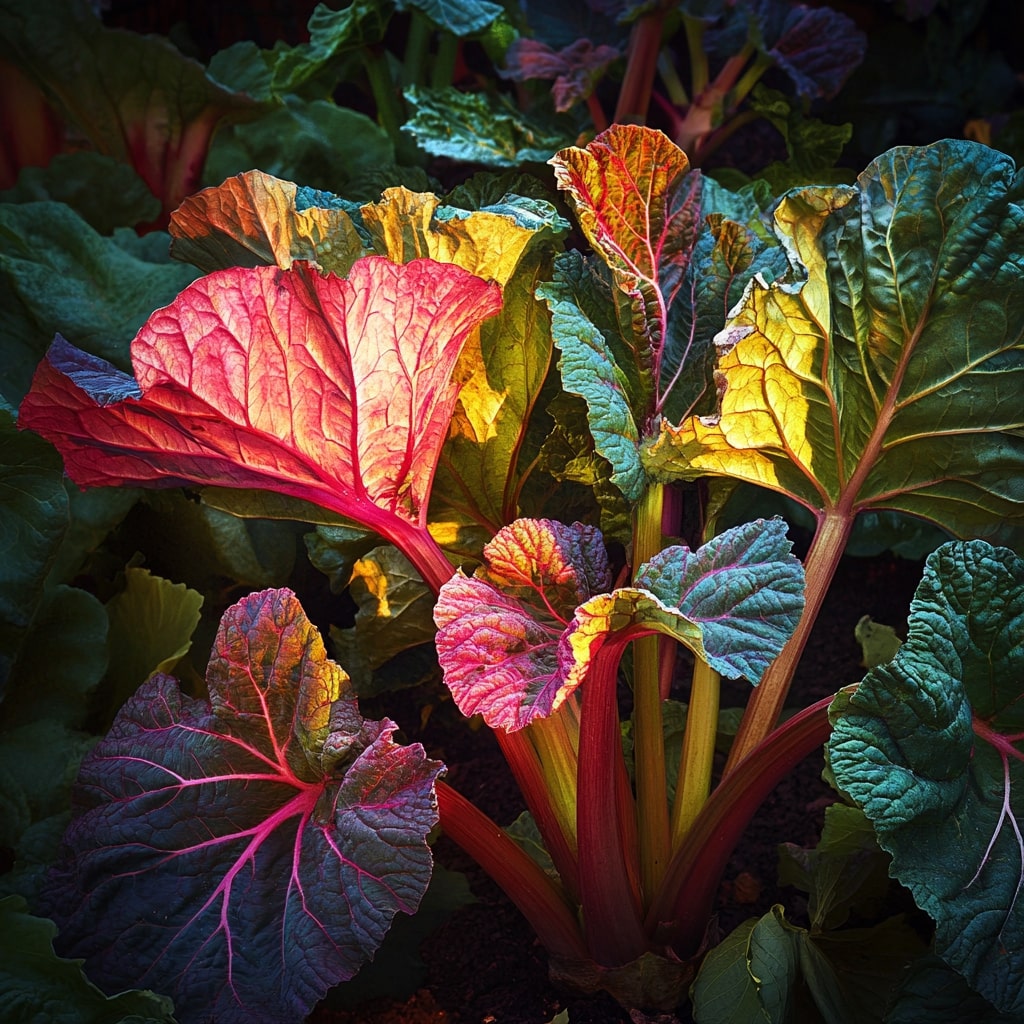
Rhubarb
Learn how to grow rhubarb successfully with proper care and soil preparation for flavorful stems.
Rhubarb is a strong perennial that suits the Dutch climate perfectly and produces fresh green leaves and sturdy, red-green stems every spring. With a nutritious, well-drained soil, sufficient moisture and a sunny location, you can enjoy a rich harvest for years to come. The sour taste of the stems makes them ideal for compotes, pies and other sweet dishes, while the plant itself requires little maintenance.
Preparation and cultivation
Soil and location
Rhubarb grows best in a sunny spot with nutritious, humus-rich soil that drains well but does not dry out. Work compost or well-decomposed manure into the top layer in autumn or early spring to improve soil structure. Avoid wet areas where water remains, as this can cause root rot. A sheltered position out of the wind helps protect the young leaves and promotes early growth in the spring.
Division and planting of rhizomes
Rhubarb is usually propagated by dividing rhizomes in early spring or autumn. Choose sturdy pieces with at least one growth bud and plant them about two inches underground. Keep a distance of about one meter between the plants so that they can develop properly. Press the soil firmly and water generously after planting. It is better to wait a year for the first harvest so that the plant can build up sufficient strength.
Care during cultivation
In the first years of growth it is important to keep the soil moist and remove weeds regularly. A mulch of compost or straw helps retain moisture and nourishes the soil. Give an extra dose of organic fertilizer in the spring to stimulate growth. Remove flower stems as they appear so that the energy goes to the stems. This is how the young rhubarb plant develops into a strong, productive perennial plant.
Planting and care
Planting rhubarb
Plant rhubarb in early spring or autumn, as soon as the soil is no longer too wet. Choose a sunny spot with nutritious, well-drained soil and work some compost or well-rotted manure into the planting hole. Place the rhizome so that the growth buds are just below the surface and keep a distance of about one meter between the plants. Press the soil firmly and water generously to ensure the roots are well established. Avoid transplanting in summer, as the soil will dry out too quickly.
Care after planting
Keep the soil around young rhubarb plants moist but not soggy, especially during dry periods. A layer of straw or compost mulch helps retain moisture and inhibits weed growth. Remove flower stems as they appear so that the plant puts its energy into the stems. Give a handful of organic fertilizer or compost in early spring to stimulate growth. Check regularly for snails, especially on young leaves, and remove damaged parts in a timely manner.
Long-term care and maintenance
Rhubarb is a perennial plant that can remain in the same spot for years, provided the soil remains nutritious. Divide root balls every five to seven years to maintain vitality and obtain new plants. Work a layer of compost around the plants each spring and remove old, withered leaves in the autumn. Provide extra water in dry summers to prevent tough stems. Leave the plant alone in the first year so that it can root well for a rich harvest in the following seasons.
Harvest and store
When to harvest rhubarb
Harvest rhubarb from late April to early July, once the stems are firm and at least 10 inches long. Pull the stems from the plant with a gentle twist rather than cutting them, so the growing points remain intact. Always leave some stems to allow the plant to recover. Stop harvesting after early July so that the rhizome can store enough energy for the next season and the plant remains healthy.
Store rhubarb safely
Fresh rhubarb stalks will keep for several days in the refrigerator, wrapped in a damp cloth or stored in an open plastic bag. For longer storage, you can cut the stems into pieces and freeze them, if necessary blanch them briefly to retain the colour and taste. Avoid storing the leaves as they contain oxalic acid and are inedible. This way you can also enjoy your own rhubarb out of season.
Process rhubarb after harvest
Preferably process harvested rhubarb the same day for the best flavour and texture. Cut off the ends, remove any threads and rinse the stems thoroughly. Rhubarb is delicious in compotes, pies or jam and combines well with strawberry or apple. Due to the sour taste, it is advisable to add some sugar. Use only the stems and discard the leaves immediately to avoid poisoning.
Rhubarb rhizome 'Victoria'
Strong and productive rhubarb variety with red-green stems and fresh, pleasantly sour taste. This species is ideal for open ground in the Dutch climate, hardy and easy to divide, so you can harvest healthy, vigorous plants with a high yield for years to come.
View productOrganic compost for kitchen garden
Rich, well-decomposed compost that improves soil structure, stimulates soil life and provides rhubarb with long-lasting nutrition. By regularly adding compost, the soil remains airy, moisture is retained better and the plants grow stronger and healthier, even in changing weather conditions.
View productWeed-free mulch layer of straw or wood chips
Natural mulch layer that keeps the soil around rhubarb moist, limits weed growth and dampens temperature fluctuations. By applying a layer of a few centimeters in the spring, the soil structure is better preserved and young shoots receive optimal protection against dehydration and cold.
View productRecipe inspiration

Rhubarb & custard pie with butter crumble
Moyra Fraser's indulgent dessert is a great mix of two classic rhubarb puds.
View recipe
Rhubarb & custard slab pie
Bake an American-style lattice pie, presented in a slab for easy portioning. Of course the rhubarb and custard combo is quintessentially British
View recipe
Rhubarb streusel pie
Bake this beautiful seasonal rhubarb pie with buttery shortcrust pastry and streusel topping and make the most of sensational spring ingredients
View recipe