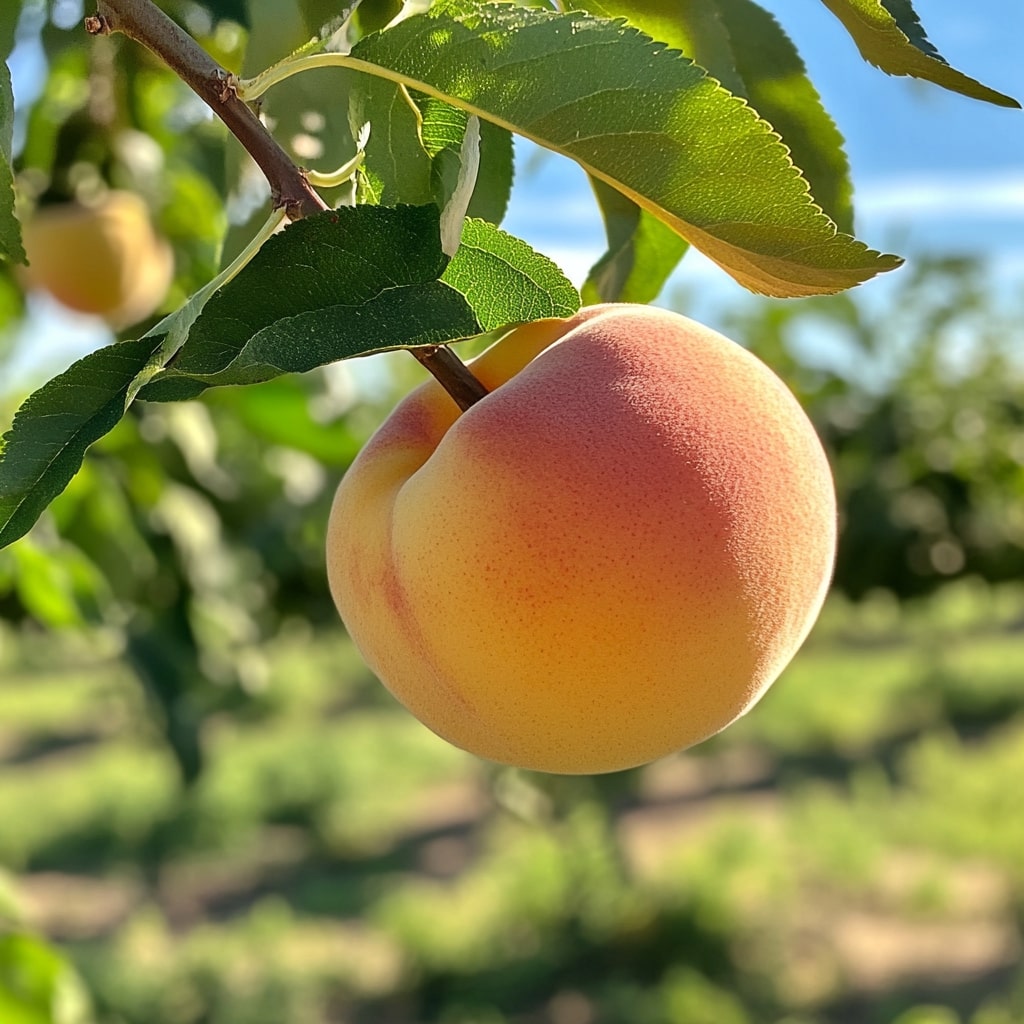
Peach
Learn how to grow peach trees successfully with proper seeding and care techniques for juicy and sweet fruits.
With the right care and location, you can grow delicious, juicy peaches in the Dutch climate. Learn how to get young trees to grow properly, when to prune for a rich harvest and how to protect the fruits against cold and mold. With attention to soil, water and sunlight, you can enjoy sultry, sweet peaches from your own garden every summer, full of flavour and aroma.
Preparation and cultivation
Soil and location
Choose a warm, sheltered spot for the peach with full sun and well-drained, calcareous soil. In the Netherlands, a south wall is ideal to capture extra heat and protect the blossoms against late night frost. Work compost or well-decomposed manure into the top layer to make the soil light and nutritious. Avoid wet feet, because peach roots do not tolerate prolonged humidity. A slightly sloping plot or raised planting spot helps drain excess water and promotes healthy root growth.
Sowing and grafting
Peaches are usually grafted onto a strong rootstock, because sowing rarely produces reliable fruit. Buy a sapling or graft yourself in early spring when the sap flow starts. Use sharp, clean tools and ensure that the graft fits snugly to the rootstock. Place the sapling in a pot or cold greenhouse to allow it to recover. Keep the soil slightly moist and provide sufficient light, but avoid drafts. After a few weeks, a firm connection is formed and the plant can be further cultivated.
Cultivation and hardening off
Once the young peach is growing well, it is important to gradually acclimate it to outdoor conditions. Place the plant outside in a sheltered spot during the day and bring it back inside at night if there is a risk of frost. This hardening prevents growth stress and promotes a strong leaf structure. Water regularly, but allow the top layer to dry slightly between waterings. After two to three weeks the peach can be finally planted outside. A mulch layer of straw or wood chips helps retain moisture and suppress weeds.
Planting and care
Planting out young peach trees
Plant young peach trees in early spring once the soil has warmed and is no longer too wet. Choose a sunny, sheltered spot, preferably against a south wall to retain heat. Dig a large planting hole, mix compost with the excavated soil and plant the tree slightly deeper than in the pot. Press the soil well and water generously. Install a support post to prevent wind damage and keep the soil moist but not soggy for the first few weeks.
Care during the growing season
Keep the soil around the trunk free of weeds and mulch with straw or compost to retain moisture. Water regularly during dry periods, especially during fruit set. Light fertilization in the spring with organic fertilizer stimulates growth and fruit formation. Check regularly for aphids and leaf curl disease and remove affected leaves immediately. By keeping the tree airy and providing it with sufficient sunlight, you reduce the risk of mold and promote healthy growth.
Prune and maintain for a rich harvest
Prune peach trees immediately after harvest or in late winter during dry weather to prevent infections. Remove dead, crossing and branches growing too close together so that light and air can penetrate properly. Limit height to facilitate picking and encourage new shoots to bear fruit next year. Keep the trunk base free from storage and check annually for frost cracks. With regular pruning and care, the tree remains vital and produces juicy peaches for years to come.
Harvest and store
When and how to harvest
Peaches are ripe when they have a warm colour, yield slightly when pressed gently and exude a sweet scent. In the Netherlands, the harvest usually takes place between the end of July and the beginning of September, depending on the variety and the summer sun. Carefully pick the fruits by hand, loosening them slightly from the branch and avoiding bruises. Harvest in dry weather to prevent mold formation and check regularly, as ripe peaches can quickly become overripe.
Storing fresh peaches
Fresh peaches taste best immediately after picking, but can be stored in a cool, dry place for several days. Do not put them in the refrigerator, because cold affects the taste and structure. If you want to keep them a little longer, choose semi-ripe ones and let them ripen indoors. Avoid stacking to avoid pressure points. For a longer shelf life, you can freeze them after pitting and blanching, so that the flavour is retained.
Canning and drying for the winter
To enjoy your harvest even in winter, you can can or dry peaches. Cut the fruits into wedges, remove the pit and process them in syrup or juice in sterilized jars. For drying, use thin slices that you dehydrate in an oven or food dehydrator at a low temperature until they are flexible but not sticky. Store the pickled or dried peaches in a dark, cool place and enjoy their summer aroma months later.
Peach tree 'Redhaven' on rootstock St. Julien A
A strong, self-pollinating peach variety that can withstand the Dutch climate. The tree produces large, juicy fruits with a sweet taste and ripens early in the summer. Ideal for a sunny spot in the garden or against a warm wall, where it is well sheltered and can bear plenty of weight.
View productOrganic fruit tree fertilizer with extra potassium
Slow-release fertilizer that stimulates the flowering and fruiting of peach trees and strengthens resistance to diseases. The fertilizer ensures firm, tasty fruits and healthy leaf growth. Apply in early spring and again after harvest for optimal results.
View productBreathable winter protection for fruit trees
Protects young peach trees from frost cracks, cold winds and bright winter sun without suffocating the trunk. The breathable fleece cloth is easy to attach, reusable and allows air and moisture to pass through. Ideal to apply in late autumn and remove in spring.
View productRecipe inspiration

Peach tarte tatin
This pudding makes it look like you’ve spent a summer in France learning the arts of the pâtissier, but it’s simply shop-bought puff pastry and peaches
View recipe

Giant peach, nectarine & apricot meringue tart
Using shop-bought puff pastry makes this dazzling summer tart topped with stone fruit, almond paste and dollops of meringue super quick to prepare
View recipe