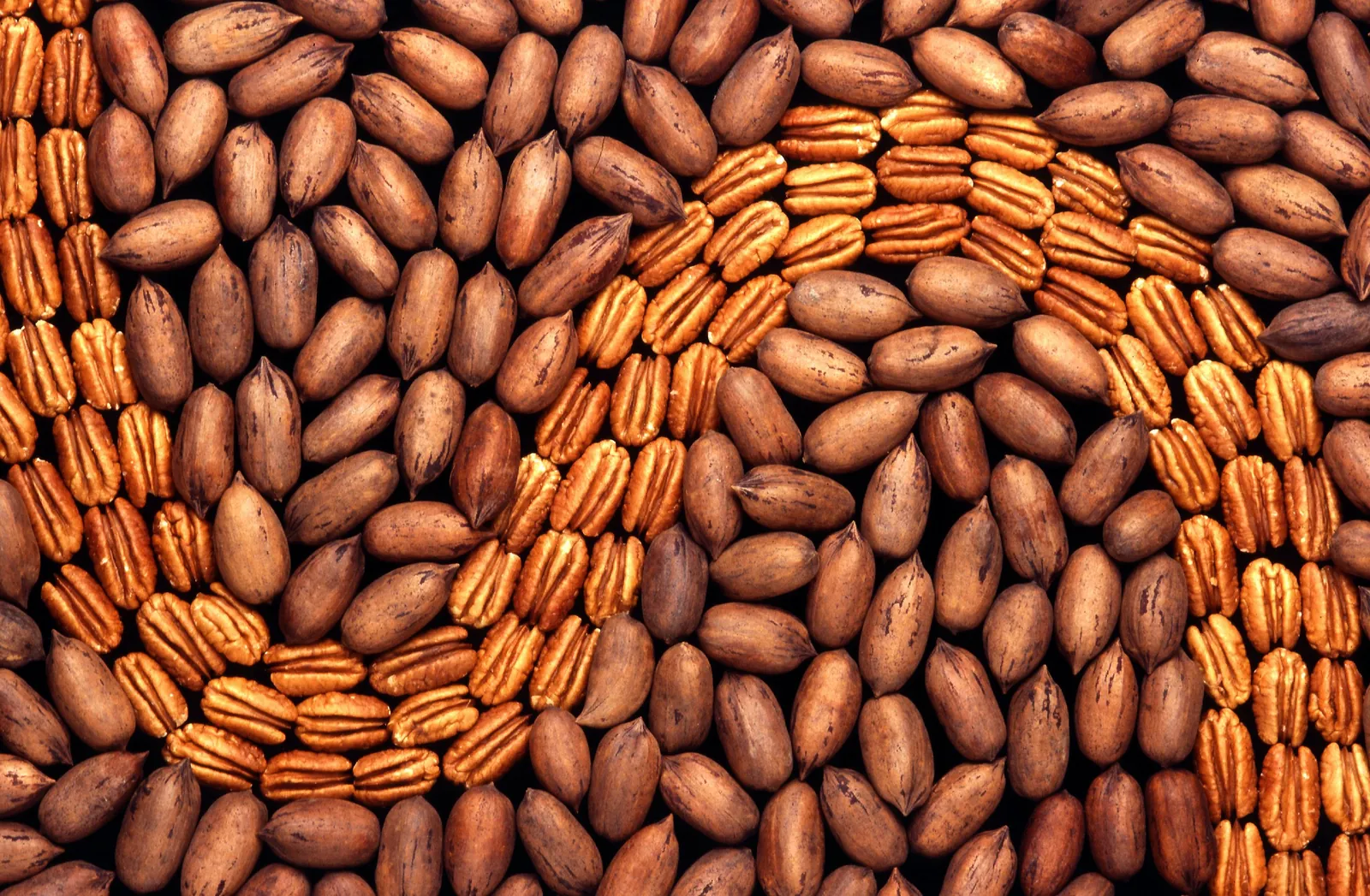
Pecan
A realistic pecan guide for Dutch gardens: climate, propagation and buying choices.
Pecan can be grown in the Netherlands, but it is more demanding than hazelnut. You need a warm site, suitable pollination partners and patience. This guide focuses on practical Dutch decisions: where pecan is most likely to work, how to propagate from a branch in a data-based way, and where to source planting material.
Making pecan work in the Netherlands
Use a warm microclimate
Pecan benefits from long, warm summers to fill nuts properly. In Dutch conditions, choose a sheltered south-facing location with good light and reduced wind exposure. Avoid frost pockets and waterlogged low spots. Warm walls or hedges can improve local heat accumulation and tree performance.
Pollination setup matters
Most pecan plantings need two cultivars with overlapping bloom windows (type I and type II). Without this, flowering can look healthy while nut set stays weak. Ask nurseries for pairings known to perform in northwestern European climates rather than only in hotter regions.
Protect young trees
Young pecans are sensitive to late spring frost and drying winter winds. Mulch the root zone, keep soil moisture stable and use breathable frost protection in harsh periods. Deep, less frequent watering is better than light daily watering for long-term root development.
Propagation from a branch: data-based advice
Rooting cuttings is unreliable
Pecan cuttings can root, but success is often low and variable. Published propagation notes mention limited strike rates under controlled conditions, which is not ideal for most home growers. So while possible, it is usually not the easiest route when you only have a few branches.
Best approach with a known tree
If you know someone with a productive pecan tree, ask for one-year scion wood in winter and graft it onto a compatible rootstock in spring. This is the standard orchard method because it preserves cultivar quality and gives far more predictable results than random seedling variation.
Seedlings are not true-to-type
Growing from nuts is useful for rootstocks and experimentation, but seedlings do not stay true to the parent cultivar. If your priority is nut quality and repeatable performance, use grafted trees or graft your own scions onto selected rootstocks.
Buying and building long-term yield
Where to buy in the Netherlands
Look for specialist fruit or nut nurseries that list cultivar names, pollination compatibility and hardiness information. Ask whether trees are grafted and which rootstock is used. That gives you a more reliable basis for planning space, pruning and expectations.
Training and pruning
Train a strong central leader and well-spaced scaffold branches. Remove damaged and crossing wood during dormancy, but avoid heavy one-time pruning on young trees. Gradual shaping keeps vigour and helps the canopy remain productive and manageable.
Production timeline
Pecan is a long-term project. Grafted trees usually bear earlier than seedlings, but still require multiple years of canopy and root development. With proper pollination and enough summer warmth, yield can improve year by year once trees mature.
Buy pecan trees in the Netherlands
Use map search to find local nurseries and compare cultivar availability, travel distance and opening times.
View locationsGrafting knife and tape
If you propagate from scion wood, clean grafting tools and proper tape are essential for cambium contact and secure healing.
View productFrost protection for young trees
A breathable winter cover helps reduce wind and frost stress during the first years of establishment.
View product