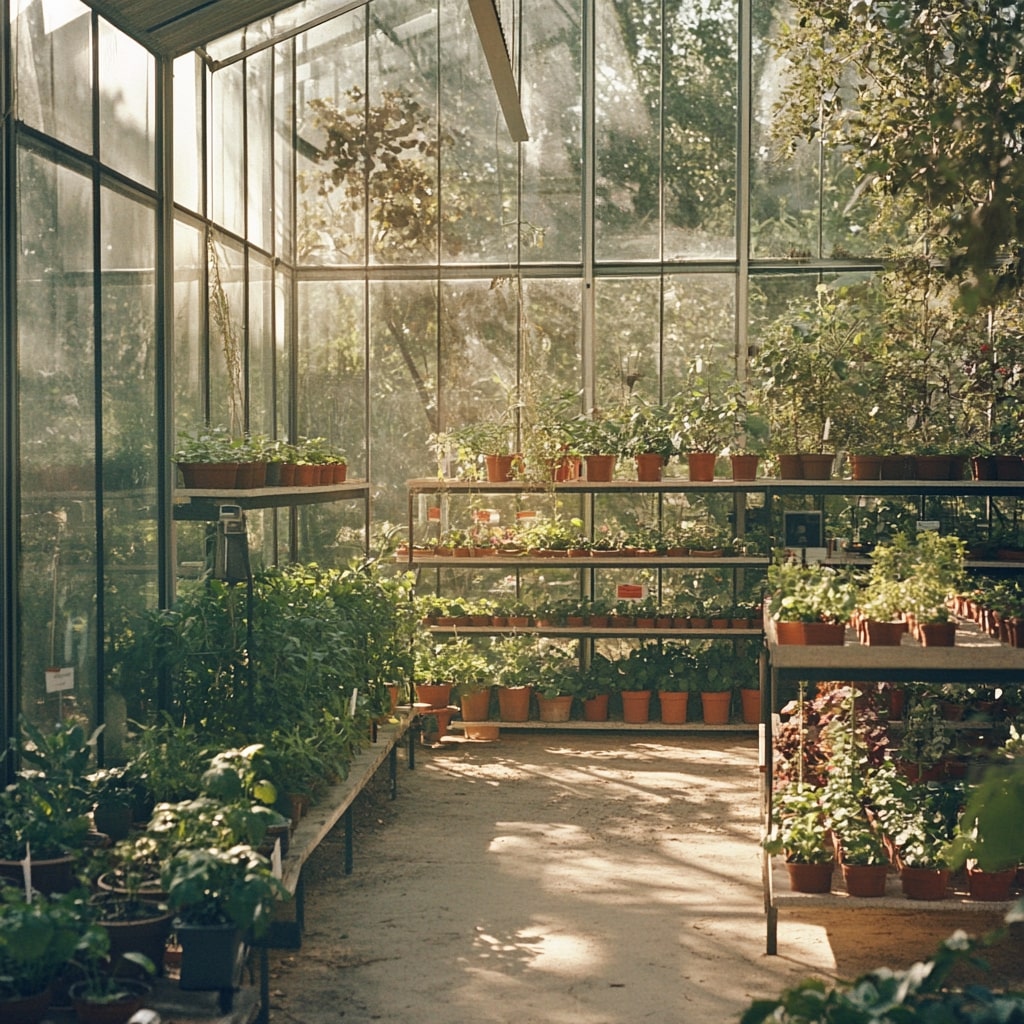
Greenhouse maintenance
Optimize growth in your greenhouse
Learn how to create an optimal greenhouse environment by providing the right temperature, humidity and support. Ensure that the temperature remains stable by using thermometers and automatic ventilation. Monitor humidity with a hygrometer and adjust with watering or humidifiers. Support your plants with stakes, nets or climbing frames to keep them upright and protect them from wind and heavy fruit.
Soil preparation and sowing
Choose a sunny location
A well-placed greenhouse with sufficient sunlight is crucial for the growth of your plants. Ideally, the greenhouse should be in a location that receives sunlight all day long, so that your plants can take maximum advantage of the heat and light. Make sure that the greenhouse is not in the shade of trees or buildings. Also consider the orientation of the greenhouse, with the long sides facing south for optimal light. Check regularly that there is no dirt or algae on the windows that could block the light.
Read moreMaintenance
Regulate the temperature
A constant temperature in the greenhouse is essential for optimal growth. Use ventilation systems and, if necessary, heating elements such as greenhouse heaters to prevent the temperature from dropping too low during cold nights. Place thermometers at different heights and locations in the greenhouse to get a good idea of the temperature distribution. Consider using heat-absorbing materials such as water or stone reservoirs to store heat during the day and release it at night.
Read moreAutomatic watering system
An automatic watering system takes the guesswork out and ensures even watering. This system adapts to the needs of your plants and can even be linked to humidity sensors. Choose a drip irrigation system to deliver water directly to the roots and minimize evaporation. Set watering times to early morning or late evening to prevent water loss due to evaporation. Regular maintenance and inspection of the system are important to prevent blockages and leaks.
Read moreHarvesting, storage and final tip
Check the humidity
Checking humidity regularly helps prevent mold and other moisture-related problems. Provide adequate ventilation and consider a humidifier if necessary. Use a hygrometer to accurately measure humidity and adjust ventilation by opening windows and doors or using fans. During dry periods, a humidifier or regular watering of the greenhouse floor can help maintain the humidity. Pay attention to condensation on the windows, this can be a sign of excessive humidity.
Read moreDutch practice: Greenhouse maintenance
Monthly planning for Dutch conditions
Plan greenhouse maintenance based on Dutch seasons and not on general international schedules. In most regions, soil development starts from February or March, with planting out after the last chance of night frost around mid-May. In coastal areas, the soil often warms up later due to wind, while sandy soils warm up faster than clay. Work with a fixed weekly check per month: soil temperature, precipitation, disease pressure and growth rate. This way you steer based on the real Dutch weather instead of just a calendar date.
Soil choice in the Netherlands: clay, sand and peat
Soil management in the Netherlands is decisive for Greenhouse Maintenance. On clay, structural improvement with compost and mulch helps to prevent silting. In sandy soils, moisture retention is the priority with organic matter and gentle, deeper watering. On peat soil you pay extra attention to nutritional deficiencies and a stable pH. Choose one approach per bed and evaluate it after each rainy period, because Dutch showers can cause a lot of leaching or waterlogging in a short time. By making soil choices explicit, the chance of success visibly increases.
Limiting weather risks in practice
In the Netherlands, prolonged rain, sudden temperature changes and snail pressure are the most common risks. Therefore, work preventively: sufficient plant distance for air circulation, water at the base instead of over the leaves, and a quick inspection round after wet days. When in doubt, stick to a simple decision rule: first drainage and air, then nutrition, and only then action against pests. This prevents overcorrection and makes greenhouse maintenance more consistent throughout the season, even in changeable years.
Greenhouse heating
A system for heating the greenhouse during cold periods. Consider using electric or gas heaters specifically designed for greenhouses. Make sure the heating elements are installed safely and meet safety standards. Place heating elements strategically to ensure even heat distribution and avoid exposing plants directly to the heat. Using insulation materials such as bubble wrap can help retain heat and reduce heating costs.
View productAutomatic Irrigation System
For constant and even watering in the greenhouse. Use a drip irrigation system or sprinklers that evenly distribute water to the plants. Set watering times carefully to avoid over- or under-watering. Automatic timers and moisture sensors can help provide the right amount of water at the right time. Regularly check the operation of the system and clean it to prevent blockages. Good watering ensures healthy plants and prevents problems such as root rot and mold.
View product