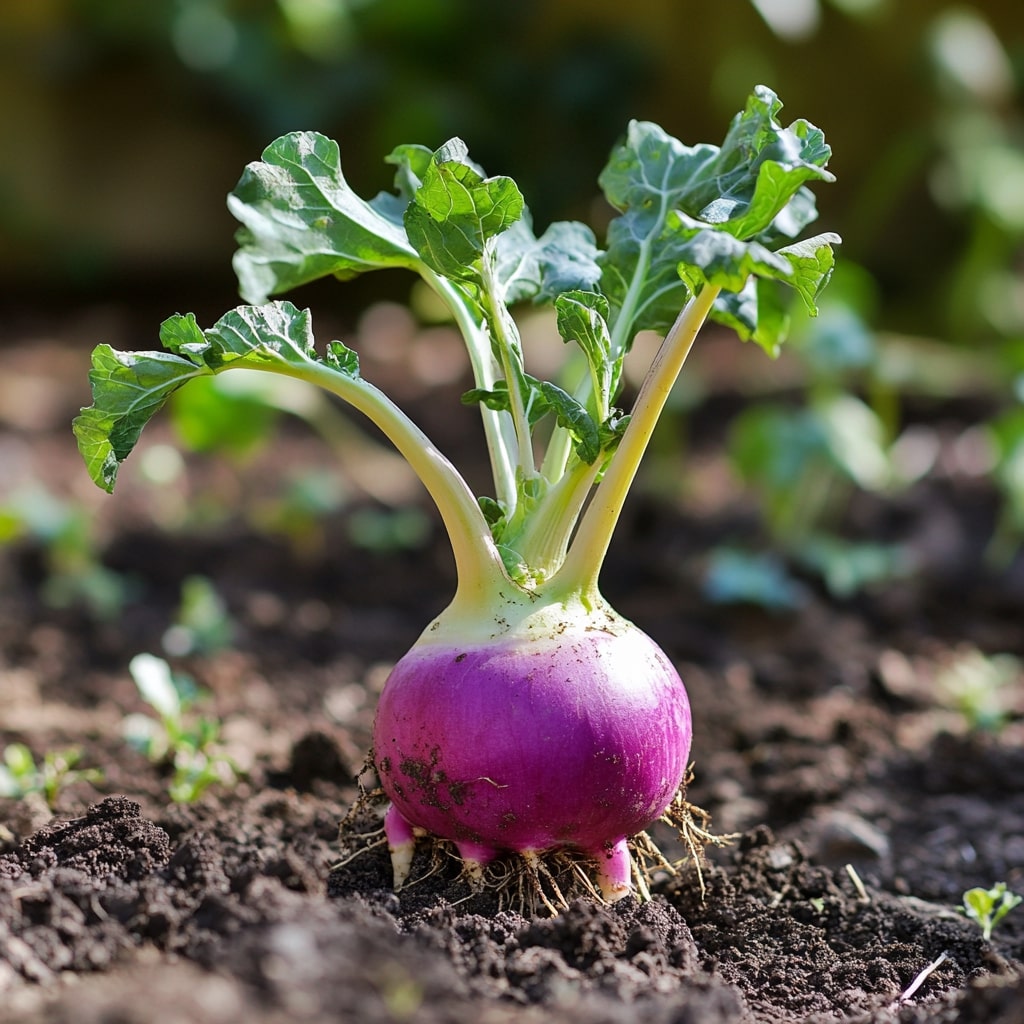
Kohlrabi
Learn how to grow kohlrabi successfully with the right sowing and care techniques for a crunchy and versatile vegetable.
Kohlrabi is a fresh, crunchy vegetable that grows excellently in the Dutch climate and is surprisingly versatile in the kitchen; With the right sowing and care techniques you can harvest firm, juicy tubers full of flavour that are delicious both raw and cooked and require little maintenance, making them ideal for novice vegetable gardeners who want to grow a reliable and tasty vegetable.
Preparation and cultivation
Soil preparation for strong tubers
Kohlrabi grows best in loose, humus-rich soil that retains moisture well but is not too wet. Dig the soil in early spring and work in some compost or well-rotted manure for extra nutrition. A pH between 6 and 7 is ideal. Remove stones and clods so that the tubers can form evenly. By raking the soil flat and pressing it lightly, you create a stable seedbed in which the young plants can take root firmly and grow evenly.
Sowing and transplanting kohlrabi
Sow kohlrabi indoors from the end of February or directly outdoors from April, depending on the temperature. Use seed trays with airy potting soil and keep the soil slightly moist. Once the seedlings have two true leaves, transplant them into separate pots to encourage strong roots. Allow the plants to harden off gradually before planting them outside. This way you prevent growth stress and promote even development of the tuber.
Planting out and early care
Plant out the young kohlrabi as soon as they are sturdy enough and the risk of night frost has passed, usually in April or May. Maintain a planting distance of approximately 25 centimeters so that the tubers have sufficient space. Water immediately after planting and keep the soil moist, especially during dry periods. Protect young plants against cabbage fly with a fine-mesh net. Regular weeding and keeping the soil loose will promote healthy growth and firm, juicy tubers.
Planting and care
Plant out at the right time
Plant out the young kohlrabi plants as soon as they have four to six true leaves and the risk of night frost has passed, usually from mid-April to early May. Choose a sunny spot with airy, nutritious soil and keep a distance of about 25 to 30 centimeters between the plants. Press the soil well around the roots and water immediately so that the plants take root. A mulch layer helps to retain moisture and limit weed growth, which promotes the growth of sturdy tubers.
Care during growth
Keep the soil evenly moist, as irregular watering can lead to woody or split tubers. In case of drought, it is better to water generously once a week rather than a little every day. Remove weeds carefully so as not to damage the superficial roots. Light fertilization with compost or organic fertilizer midway through growth supports healthy development. Regularly check for caterpillars and snails and remove them manually to prevent damage to the leaves.
Protection and support
Kohlrabi grows quickly, but is sensitive to temperature fluctuations and cabbage fly. Use insect netting to prevent damage and keep the soil airy by raking it occasionally. On cold nights, a fleece cloth can provide protection against frost. Remove damaged leaves to avoid mold and promote air circulation between the plants. By consistently weeding and checking for pests, the kohlrabi stays healthy and develops a beautiful, crispy tuber.
Harvest and store
When kohlrabi is ready for harvesting
Kohlrabi is ready to harvest when the tuber has a diameter of about 7 to 10 centimeters and is still firm to the touch. Do not wait too long, because tubers that are too large become fibrous and lose their mild taste. Cut the tuber just above the ground with a sharp knife and remove the leaves. In the Dutch climate you can often harvest after 8 to 10 weeks, depending on the variety and temperature. Preferably harvest in the morning for the best freshness.
Storing kohlrabi after harvest
After harvesting, you can store kohlrabi in a cool place for a few days with the foliage attached, but for a longer shelf life, remove the leaves and store the tubers in a damp cloth or perforated bag in the refrigerator. This way they stay crispy for up to two weeks. They will last even longer in a cool basement or shed with high humidity. Check regularly for dehydration or mold and use the oldest specimens first.
Freeze or process kohlrabi
If you want to store kohlrabi for longer, freezing is an excellent option. Peel the tubers, cut them into cubes and blanch them in boiling water for two to three minutes. Drain them well and then freeze them in portions. This way the vegetable retains its taste and structure. Preserving it in vinegar or processing it into puree or soup is also a good way to utilize the harvest, especially when the yield is plentiful in the summer.
Kohlrabi seeds early variety
Early germinating kohlrabi seeds that can withstand the Dutch spring and are suitable for an early harvest of crispy, juicy tubers. Sow them under glass or directly in the ground as soon as the temperature rises above 10 degrees, water regularly and enjoy a reliable, tasty harvest in your kitchen garden.
View productAiry kitchen garden soil with compost
Nutritious, well-drained soil mix with compost and organic matter that promotes the growth of sturdy kohlrabi. This mix retains moisture without wilting, stimulates active soil life and helps prevent tuber cracking during fluctuating humidity in the Dutch climate, ideal for healthy vegetables.
View productFine mesh insect screen
Fine-mesh insect screen that repels cabbage flies, caterpillars and other pest insects without restricting air circulation. Ideal for protecting young kohlrabi plants against damage, while light and rain simply penetrate so that the plants continue to grow healthily in the Dutch garden throughout the season.
View productRecipe inspiration

Shaved kohlrabi salad with pickled jalapeño dressing
Elevate your summer dinner parties with this kohlrabi salad that's salty, briny and a little spicy. Beautiful on a platter, it can be assembled in minutes
View recipe
Peppery kohlrabi slaw
With crunchy kohlrabi, horseradish and spring greens, this coleslaw is quick enough for everyday, yet unusual enough to impress guests
View recipe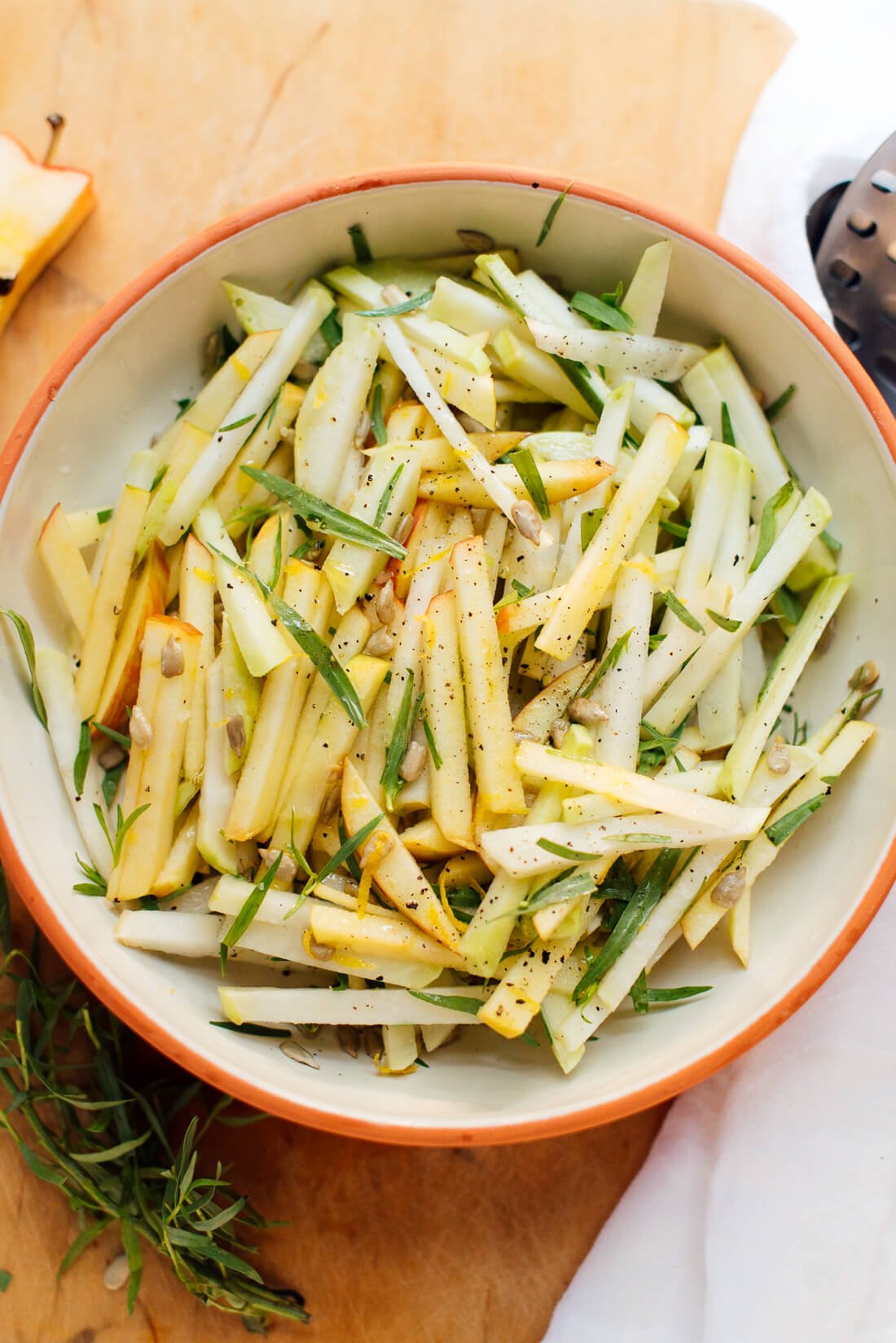
Crisp Apple & Kohlrabi Salad
This super simple kohlrabi salad features honeycrisp apple, lemon, tarragon and olive oil! It's a delicious and unique fall side salad. You'll love it!
View recipe