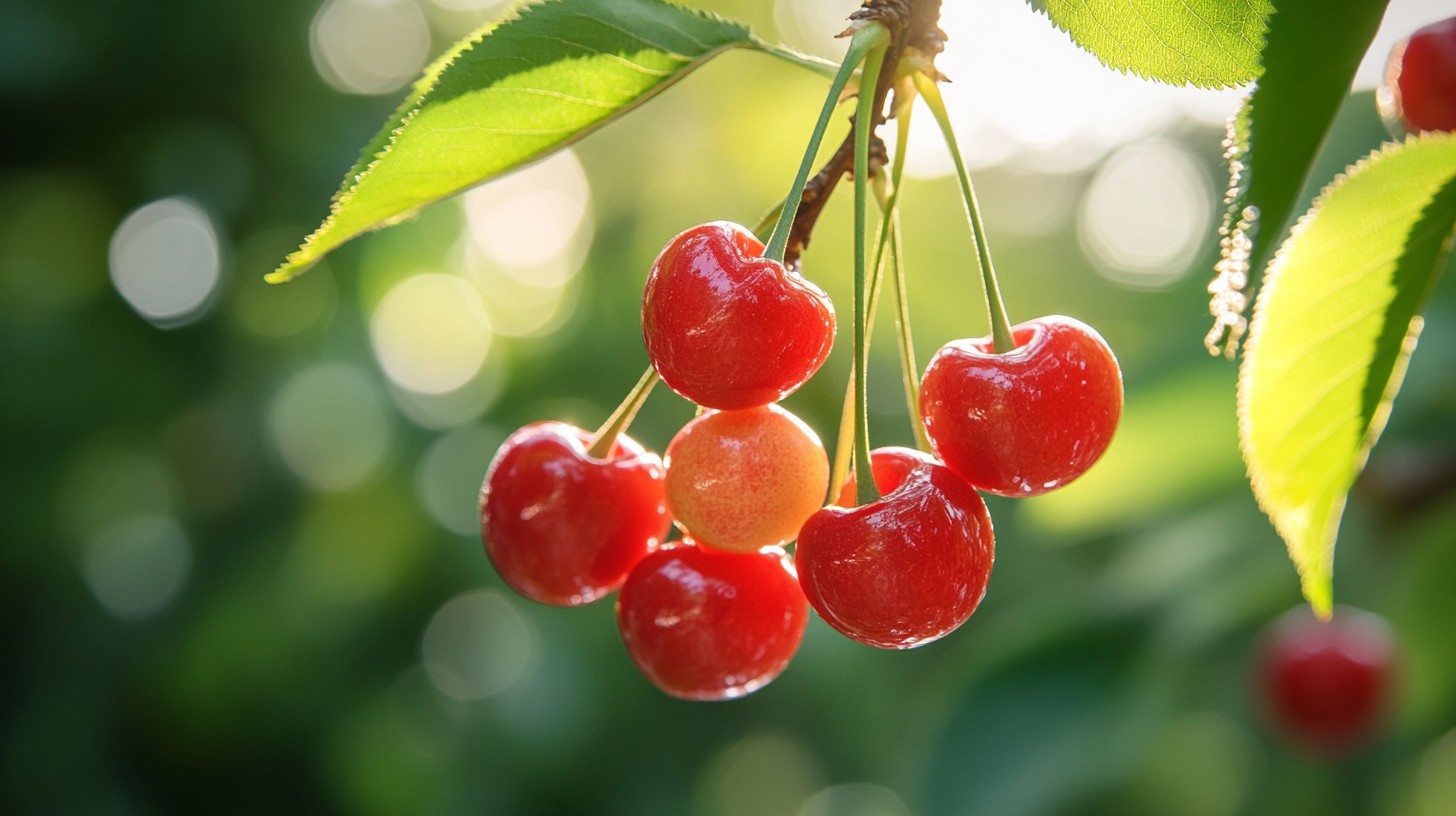
Cherry trees
Discover how to grow beautiful cherry trees in the Netherlands with extensive tips on soil preparation, sowing, maintenance and harvest. Learn the secrets behind sweet, juicy cherries and a bountiful harvest.
Cherry trees not only produce delicious fruit, but also beautiful blossoms that brighten up any garden. With the right soil preparation, location and care, you can enjoy healthy trees and a rich harvest in the Dutch climate. Discover how to stimulate growth, prevent diseases and pick the juiciest cherries for a summer treat from your own garden, straight from your own HelperHoeve.
Preparation and cultivation
Soil preparation for healthy growth
A cherry tree requires a well-drained, fertile soil with a neutral to slightly calcareous pH. Dig the soil deeply in autumn or early spring and mix in well-rotted compost or old farmyard manure. Avoid wet areas where water remains, as this can cause root rot. An airy structure helps the young roots to establish themselves quickly. Flatten the soil and let it rest for a few weeks before planting, so that the soil can settle and the nutrients are distributed properly.
Choose the right location
Cherry trees like a sunny, sheltered spot where they get at least six hours of direct sunlight per day. Choose a location out of the wind, for example along a hedge or wall that retains heat. Avoid low areas of the garden where cold air lingers, as late night frost can damage the blossoms. Keep sufficient distance between trees so that air can circulate properly and fungi have less chance. A well-chosen location not only promotes flowering, but also the taste and size of the cherries.
Growing young cherry trees
Plant young cherry trees preferably in early spring or late autumn, when the ground is not frozen. Make a large planting hole and position the tree so that the graft site remains just above the ground. Fill with loose soil and press lightly to prevent air holes. Water immediately and apply a mulch layer to retain moisture. Regular watering is important in the first year, especially during drought. Monitor growth and remove weak shoots so the tree develops a strong, balanced crown.
Planting and care
When and how to plant out
Plant young cherry trees preferably in early spring or late autumn, when the ground is not frozen and there is sufficient moisture. Dig a large planting hole, mix compost into the excavated soil and position the tree so that the graft site remains just above the ground. Press the soil firmly and water generously. Place a support post on young trees to prevent crooked growth and keep the soil slightly moist in the first weeks for good root development.
Care during growth
A cherry tree requires regular attention to stay healthy. Provide extra water during dry periods, especially in the first years after planting. Apply a layer of organic fertilizer or compost in the spring to stimulate growth. Remove weeds around the trunk so the roots don't have to compete for nutrients. Check regularly for aphids or caterpillars and preferably use natural pesticides. A mulch layer helps retain moisture and protects against temperature fluctuations.
Pruning and maintenance
Prune cherry trees immediately after harvest, in dry weather, to prevent infections. Remove dead, crossing or inward growing branches so that light and air can reach the crown properly. Limit heavy pruning, because cherries react sensitively to it. Keep the tree open in structure to prevent fungal diseases and thus promote abundant flowering the following year. Check the trunk and branches annually for damage and treat wounds with a wound dressing to prevent infections.
Harvest and store
Determine the right harvest time
Cherries are ripe when they are fully colored and easily detach from the stem. In the Netherlands, the harvest usually takes place between the end of June and mid-July, depending on the variety and the weather. Pick in dry weather to prevent mold formation and use a soft hand so that the stems remain intact. This way the fruits stay fresh longer and you prevent damage to the tree. Check daily as ripe cherries can quickly become overripe in warm weather.
Pick and handle cherries carefully
Use a small basket or bucket with soft lining to prevent bruising during picking. Leave the stems on the cherries to extend their shelf life. Avoid stacking too many layers of fruit as the weight can damage the bottom cherries. Work in the cool of the morning or evening to keep the fruits fresh. After picking you can immediately cool them to optimally preserve the taste and firmness.
Storing and processing the harvest
Store fresh cherries in the refrigerator at a temperature of about 2 to 4 degrees, preferably in an open container so that moisture can escape. Only wash them just before use to prevent mold. For longer storage, you can freeze, stone or process cherries into jam, juice or compote. Frozen, they will last for months and retain their flavour. This way you can also enjoy the summer harvest from your own garden in winter.
Cherry tree 'Regina' on Gisela 5 rootstock
This self-pollinating cherry tree is ideal for Dutch gardens thanks to its compact growth and high yield of sweet, firm fruits. The Gisela 5 rootstock ensures early fruit set, makes the tree suitable for smaller gardens or large pots and quickly produces a rich harvest with good care and sufficient sun.
View productOrganic fruit tree fertilizer with extra potassium
A balanced fertilizer specially developed for fruit trees such as cherries, promotes strong root growth and rich flowering. The extra potassium supports fruit formation, increases resistance to diseases and helps trees recover better after pruning or harvest, ideal for use in spring and autumn.
View productFine mesh bird net for fruit trees
Protect your ripening cherries from birds with a durable, fine-mesh net that allows light and air to pass through but keeps the harvest safe. The net is easy to attach over the tree or a frame, reusable, resistant to Dutch weather conditions and prevents damage without harming the environment.
View productRecipe inspiration

Simnel cherry tart
This teatime treat is a cross between a fruity spring-like simnel cake and a bakewell tart – great with a cuppa
View recipe
Pistachio & black cherry bakewell tart
This nutty pistachio sponge has a layer of sweet, black cherry jam that'll leave you wanting more. It's an impressive party dessert, yet simple to make
View recipe
Cherry & almond tarts
These mini bakewell bites combine pastry and cake are designed for making in batches and cooking from frozen
View recipe