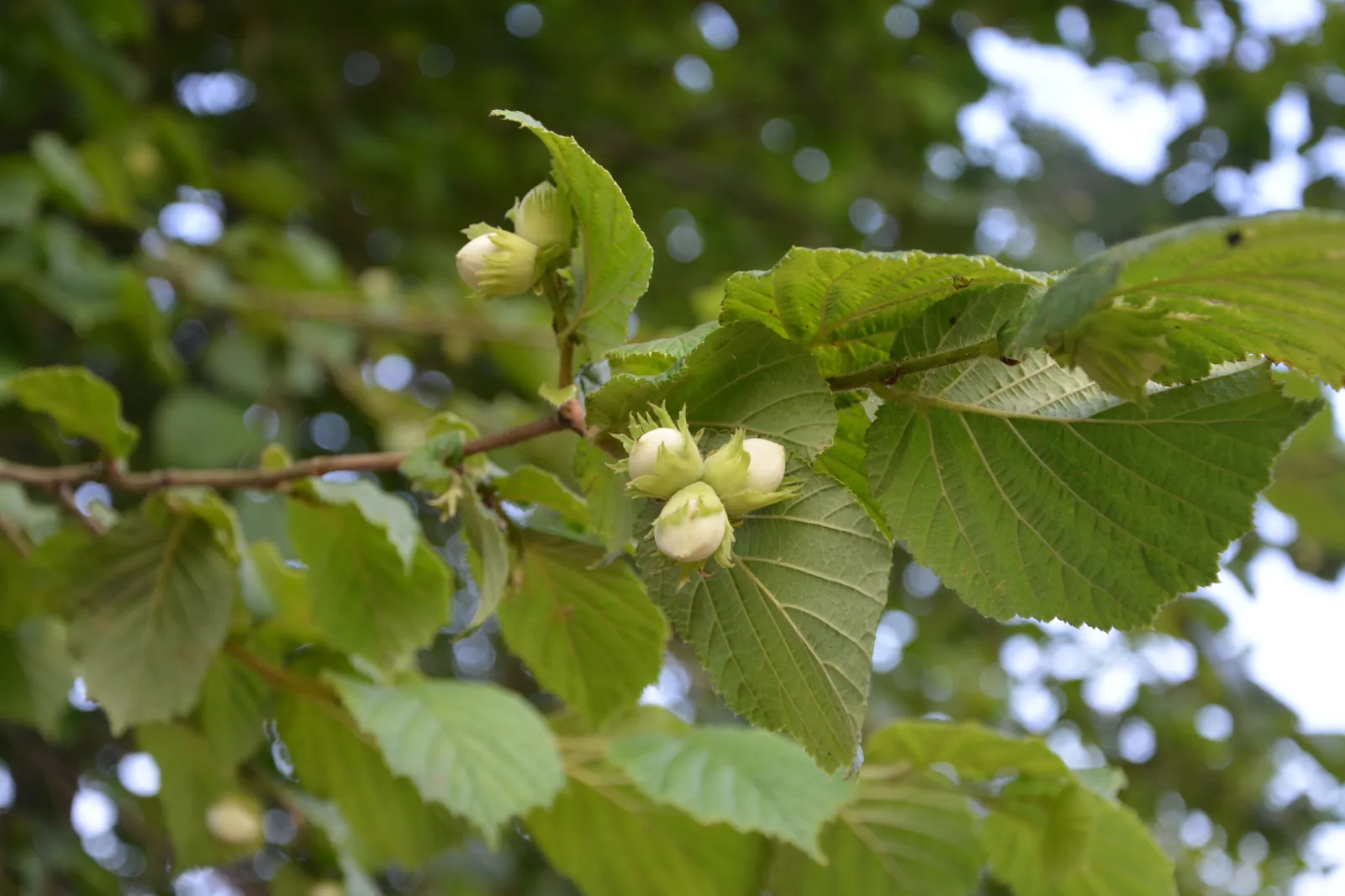
Hazelnut
Growing and buying hazelnuts in the Netherlands: from planting to harvest.
Hazel is one of the most realistic nut crops for Dutch home gardens. With the right cultivar pair, enough wind pollination and a simple pruning routine, you can build a reliable yield over time. This guide focuses on Dutch conditions and explains what actually works for propagation, including easy layering from a branch when you know someone with a healthy shrub.
Getting started in Dutch conditions
Choose cultivars for pollination
Plant at least two different hazelnut cultivars with overlapping bloom periods. Hazelnuts are wind pollinated, so flowering overlap matters more than insect activity. A good early plus mid-season pair improves nut set in variable Dutch spring weather and reduces the risk of a weak crop.
Site and soil
Choose full sun to light shade with free-draining, humus-rich soil. Hazelnut tolerates several soil types in the Netherlands, but standing winter water is a problem. Work in compost before planting and keep about 3 to 4 metres spacing so the canopy stays open and productive.
Best planting window
Plant from November to February while plants are dormant. This gives roots time to establish before spring growth starts. In the first season, water during dry spells and keep a mulch ring around the base. That stabilises soil moisture and limits weed competition.
Annual care and harvest
Pruning strategy
In winter, remove dead, crossing and overly dense wood to maintain an open structure. Aim for a framework of strong main stems. If you grow grafted plants, remove suckers below the graft union. Better light and airflow support healthier growth and easier harvesting.
Feeding and water
Apply organic fertiliser in early spring and top up with compost each year. Keep moisture steady from late spring through summer while nuts are filling. Long dry spells can reduce nut size or cause premature drop, so deep watering during drought makes a visible difference.
Harvest timing
In the Netherlands, hazelnuts usually ripen from late August into October. Harvest when husks turn brown and nuts start dropping naturally. Dry the nuts for one to two weeks in a warm, ventilated area, then store them cool and dry for long shelf life.
Propagation from a branch: what is realistic
Layering is the easy method
If you know someone with a healthy hazel shrub, layering is usually straightforward. Bend a young branch to the soil, pin part of it down, cover that section with soil and leave the tip exposed. The buried section commonly roots within the season and can be separated as a new plant.
Why layering beats hardwood cuttings
For hazelnut, practical propagation systems rely heavily on layering and suckers because they are more consistent than hardwood cuttings. You also keep the exact genetics of the parent plant, which helps preserve nut quality and growth behaviour.
Buying in the Netherlands
When buying, ask for cultivar name, pollination partner and whether the plant is grafted or own-root. That single check prevents many long-term issues and helps you choose the right pruning and maintenance approach from year one.
Buy hazelnut plants in the Netherlands
Use map results to find nearby growers and nurseries, then compare cultivar availability and pollination advice.
View locationsLayering and pruning kit
Ground pins, ties and a sharp pruner make layering cleaner and safer, especially when separating newly rooted branches.
View productFine mesh harvest net
A lightweight net helps reduce losses to birds and squirrels while nuts are ripening.
View product