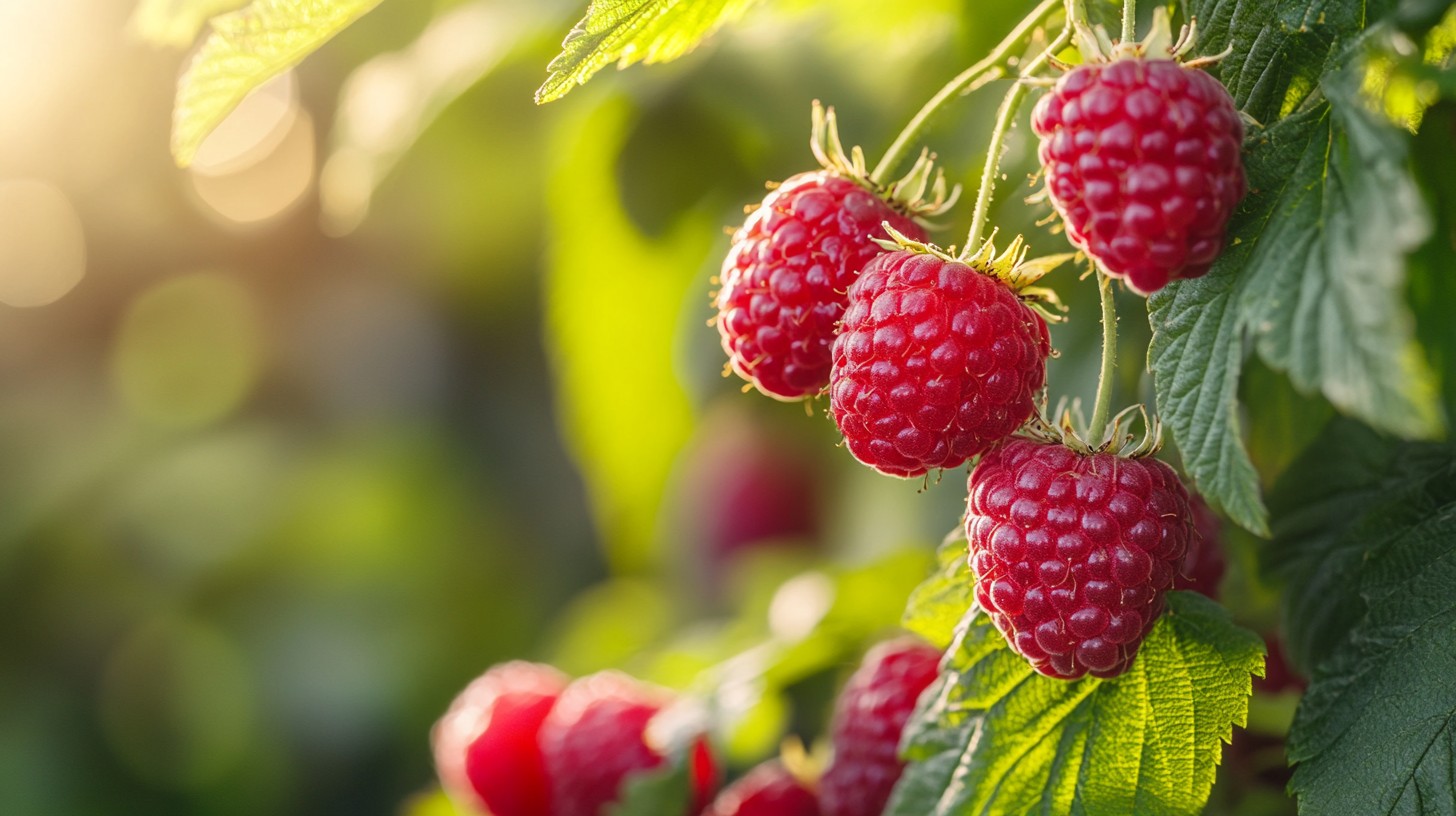
Raspberries
Learn how to grow fresh and sweet raspberries in Dutch gardens. Receive extensive tips on soil preparation, sowing, maintenance and harvest, so you can enjoy a rich raspberry harvest.
With the right care and location, you can enjoy juicy, sweet raspberries in the Dutch climate for years to come. By properly preparing the soil, allowing young plants to grow vigorously and pruning the shrubs regularly, you promote healthy growth and a rich harvest. This way you can enjoy fresh raspberries full of flavour and colour from your own garden every year.
Preparation and cultivation
Soil preparation for healthy raspberries
Start with a light, humus-rich soil that drains well but does not dry out. In the autumn or early spring, work compost or well-rotted manure into the topsoil to nourish the soil. Raspberries like a slightly acidic pH between 5.5 and 6.5, so add some peat or leaf soil if necessary. Provide a sunny, sheltered spot out of the wind and avoid wet feet by creating raised beds or ridges. A good start prevents diseases and stimulates strong root growth.
Proper planting and spacing between shrubs
Plant raspberries in early spring or autumn when the ground is not frozen. Place the plants about 40 to 50 centimeters apart in rows with 1.5 to 2 meters apart, so that air and light can circulate well. Place the roots just below the soil surface and press the soil firmly. Water immediately after planting and mulch with straw or wood chips to retain moisture and suppress weeds. This way, young plants develop quickly and evenly.
Cultivation and support of young shoots
Regular care is important during the first months of growth. Gently tie young shoots to wires or a rack to help them grow upright and prevent breakage. Keep the soil moist but not soggy, especially during dry periods. Remove weak or damaged stems so that energy goes to strong shoots. Light fertilization in the spring with organic fertilizer promotes strong growth. This is how you build a healthy foundation for a productive raspberry bush.
Planting and care
Soil preparation for healthy raspberries
Raspberries grow best in airy, humus-rich soil that retains moisture well but is not too wet. Work compost or well-decomposed manure into the top layer in autumn or early spring and check the pH value; slightly acidic around 6 is ideal. In heavy clay soil, add some sand or leaf compost for better drainage. A mulch layer of straw or wood chips helps retain moisture and suppress weeds, protecting the roots from drying out and temperature fluctuations. This way you lay a healthy foundation for strong plants.
Proper planting and spacing between shrubs
Plant raspberries in early spring or autumn in a sunny, sheltered spot. Keep a distance of approximately 40 to 50 centimeters between the plants and 1.5 to 2 meters between the rows, so that air can circulate properly and mold formation is prevented. Place the roots just below the soil surface and press the soil firmly. Water generously immediately after planting and apply a mulch layer to retain moisture. This way, young plants get a strong start and quickly develop new shoots.
Cultivation and support of young shoots
Raspberries grow quickly and need support to stay upright. Stretch horizontal wires between posts at a height of approximately 50, 100 and 150 centimeters and tie the shoots loosely to them. Remove weak or damaged branches so that the energy goes to healthy shoots. Water regularly during dry periods and keep the soil weed-free. By properly training and supporting young plants, an open shrub is created that catches a lot of sunlight and bears abundant fruit throughout the season.
Harvest and store
When to harvest raspberries
Raspberries are ripe when they peel easily from the plant and have a deep, full colour. In the Netherlands, the harvest usually falls between June and August, depending on the variety. Pick in dry weather to prevent mold formation and check daily, because ripe fruits spoil quickly. Use a shallow container so that the soft berries are not crushed and store them immediately in a cool place to retain their freshness. Regular picking also stimulates new fruit formation.
Store raspberries and keep them fresh
Fresh raspberries are fragile and will only last one to two days in the refrigerator. Place them in a single layer on paper towels to absorb moisture and remove any damaged ones immediately. For longer storage you can freeze the berries: first spread them loose on a baking sheet, let them freeze and then put them in an airtight bag. This means they can be used for smoothies, desserts or jam for months.
Processing raspberries after harvest
To ensure that none of your harvest is lost, you can process raspberries into jam, syrup or coulis. Puree the berries and heat them briefly with some sugar to preserve the taste. Drying in an oven at a low temperature is also possible, which gives you a concentrated, sweet snack. Use clean jars or containers and store them in a cool, dark place. This way you can enjoy the summer taste of your own raspberries even outside the season.
Raspberry plant summer and autumn variety
Choose strong raspberry varieties that perform well in the Dutch climate, such as 'Tulameen' or 'Autumn Bliss'. These plants produce sweet fruits and are suitable for both open ground and large pots. Plant them in a sunny spot with airy, humus-rich soil for a rich harvest.
View productRaspberry rack or bamboo climbing aid
A sturdy rack or bamboo climbing aid supports the long shoots of raspberries and prevents them from falling over or breaking in the wind. This promotes air circulation and makes picking easier. Place the rack immediately when planting for stable growth.
View productOrganic berry fertilizer for raspberries
Use an organic fertilizer specifically for berries to stimulate the growth and fruiting of raspberries. This fertilizer gradually nourishes and improves the soil structure, which is important for healthy roots and high yields. Apply in spring and after harvest.
View productRecipe inspiration

Apricot & raspberry tart
Delicious served hot or cold, this tart uses filo pastry to keep the calories down
View recipe
Raspberry tart with almond pastry
This tasty tart is the perfect summer dessert for a crowd
View recipe
Raspberry, lemon & frangipane tart
The most stunning summer dessert ever; raspberry, lemon and frangipane tart
View recipe