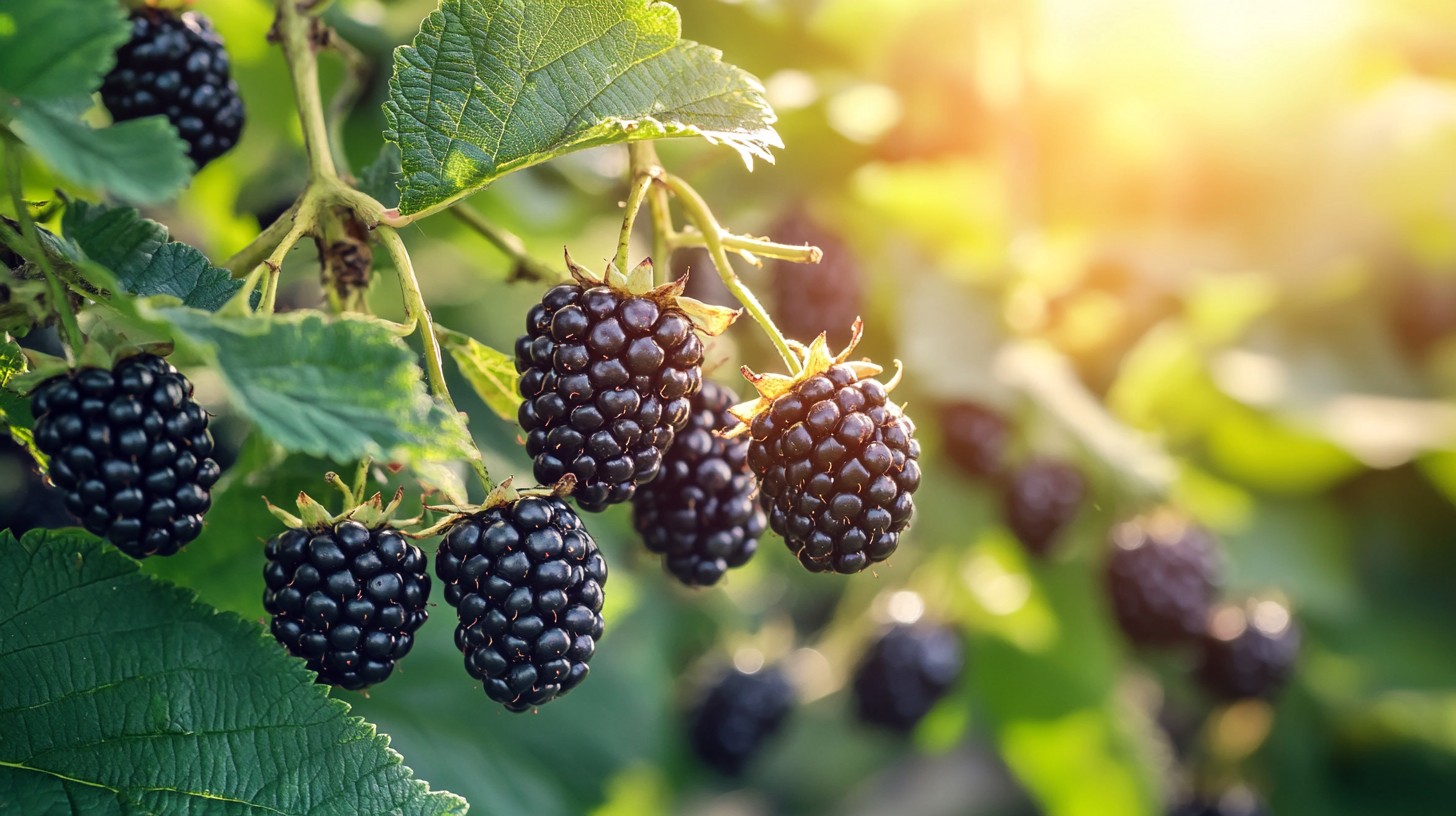
Blackberries
Discover advanced methods for a rich blackberry harvest
Discover how to grow delicious blackberries in the Netherlands. Learn all about proper soil preparation, including improving soil structure and adding organic matter. Sowing and planting techniques, such as choosing the right sowing depth and planting distance, are crucial for a good start. Maintenance, such as regular pruning and checking for pests, is essential for healthy plants. Top harvesting and storage tips include recognizing the correct harvest time and the best ways to keep blackberries fresh or process them.
Soil preparation and sowing
Soil conditions for blackberries
Provide a fertile, well-drained soil with a slight acidity. Add compost for extra nutrients and an optimal start. Improving soil structure with compost increases water retention and air circulation, which is essential for blackberry root development. A pH value between 6 and 6.5 is ideal for blackberries as this promotes nutrient absorption.
Choosing varieties
Select blackberry varieties that are known for their sweet taste and high yield, and that suit the Dutch climate well. Some recommended varieties are 'Black Satin' and 'Loch Ness', which thrive in Dutch conditions. Choosing varieties that are resistant to local diseases can also contribute to a healthier harvest.
Planting methods
Sow or plant blackberries in early spring in a sunny location, providing plenty of space between plants for good air circulation. A planting distance of approximately 1 meter ensures that the plants can develop properly and reduces the risk of fungal diseases through better air flow.
Maintenance
Water management
Provide even watering, especially during dry periods, to optimally support blackberry growth. Blackberries need about an inch of water per week. A drip irrigation system can help distribute water evenly and prevent waste.
Pruning for shape
Prune blackberry vines to create an open, well-ventilated structure, which promotes yield and fruit quality. Removing old and diseased branches in late winter or early spring allows for new growth and better light penetration, which stimulates fruit production.
Natural control
Take preventive measures against pests and diseases with biological control agents so that the plants remain healthy. For example, use neem oil or insect soap to combat common pests such as aphids and spider mites. Regular inspection of the plants helps in early detection of problems.
Harvesting, storage and final tip
Harvest at optimal ripeness
Harvest blackberries when they are deep purple and slightly shiny, indicating their maximum sweetness and juiciness. The berries should release easily from the plant without applying too much pressure. This is usually mid to late summer.
Pick carefully
Pick the blackberries by hand to avoid damage so they stay fresh longer and retain their flavour. Use your thumb and index finger to gently remove the berries from the plant. This prevents bruises and extends the shelf life.
Storage and immediate use
Store blackberries in the refrigerator and use them within a few days, or use them directly in jam or desserts for optimal freshness. Place the berries in a single layer in a shallow container covered with a paper towel to absorb moisture. For longer storage, blackberries can also be frozen.
Dutch practice: Blackberries
Monthly planning for Dutch conditions
Plan Blackberries based on Dutch seasons and not general international schedules. In most regions, soil development starts from February or March, with planting out after the last chance of night frost around mid-May. In coastal areas, the soil often warms up later due to wind, while sandy soils warm up faster than clay. Work with a fixed weekly check per month: soil temperature, precipitation, disease pressure and growth rate. This way you steer based on the real Dutch weather instead of just a calendar date.
Soil choice in the Netherlands: clay, sand and peat
Soil management in the Netherlands is decisive for blackberries. On clay, structural improvement with compost and mulch helps to prevent silting. In sandy soils, moisture retention is the priority with organic matter and gentle, deeper watering. On peat soil you pay extra attention to nutritional deficiencies and a stable pH. Choose one approach per bed and evaluate it after each rainy period, because Dutch showers can cause a lot of leaching or waterlogging in a short time. By making soil choices explicit, the chance of success visibly increases.
Limiting weather risks in practice
In the Netherlands, prolonged rain, sudden temperature changes and snail pressure are the most common risks. Therefore, work preventively: sufficient plant distance for air circulation, water at the base instead of over the leaves, and a quick inspection round after wet days. When in doubt, stick to a simple decision rule: first drainage and air, then nutrition, and only then action against pests. This prevents overcorrection and makes Blackberries more consistent throughout the season, even in changeable years.
Organic Blackberry Fertilizer
A special fertilizer for blackberries that promotes growth and ensures a sweet and bountiful harvest. This fertilizer contains a balanced mix of nitrogen, phosphorus and potassium, as well as micronutrients essential for the development of strong roots and healthy fruits.
View productBlackberry plant pots
Durable pots for growing blackberries in small gardens or on balconies, designed for optimal drainage and growth. These pots are made from recycled material and have good water drainage to prevent root rot. They are also large enough to give the roots plenty of room to develop.
View productEfficient Irrigation System
An advanced irrigation system that provides constant watering, essential for healthy growth and fruit set of blackberries. This system can be programmed to water at specific times, which helps keep the plants hydrated without overwatering.
View productRecipe inspiration

Blackberry custard tarts
How can you improve a traditional egg custard tart? We've tried by spicing up the pastry with nutmeg and adding berries
View recipe
Apple & blackberry crumble
Make this seasonal apple and blackberry crumble for a comforting family pud. Pre-cooking the topping will make it extra-crispy, while also retaining the texture of the fruit
View recipe
Apple & blackberry jam
Got a glut of apples or blackberries? Transform them into jam and gift to family and friends. Enjoy in your favourite sponge cakes or on your morning toast
View recipe