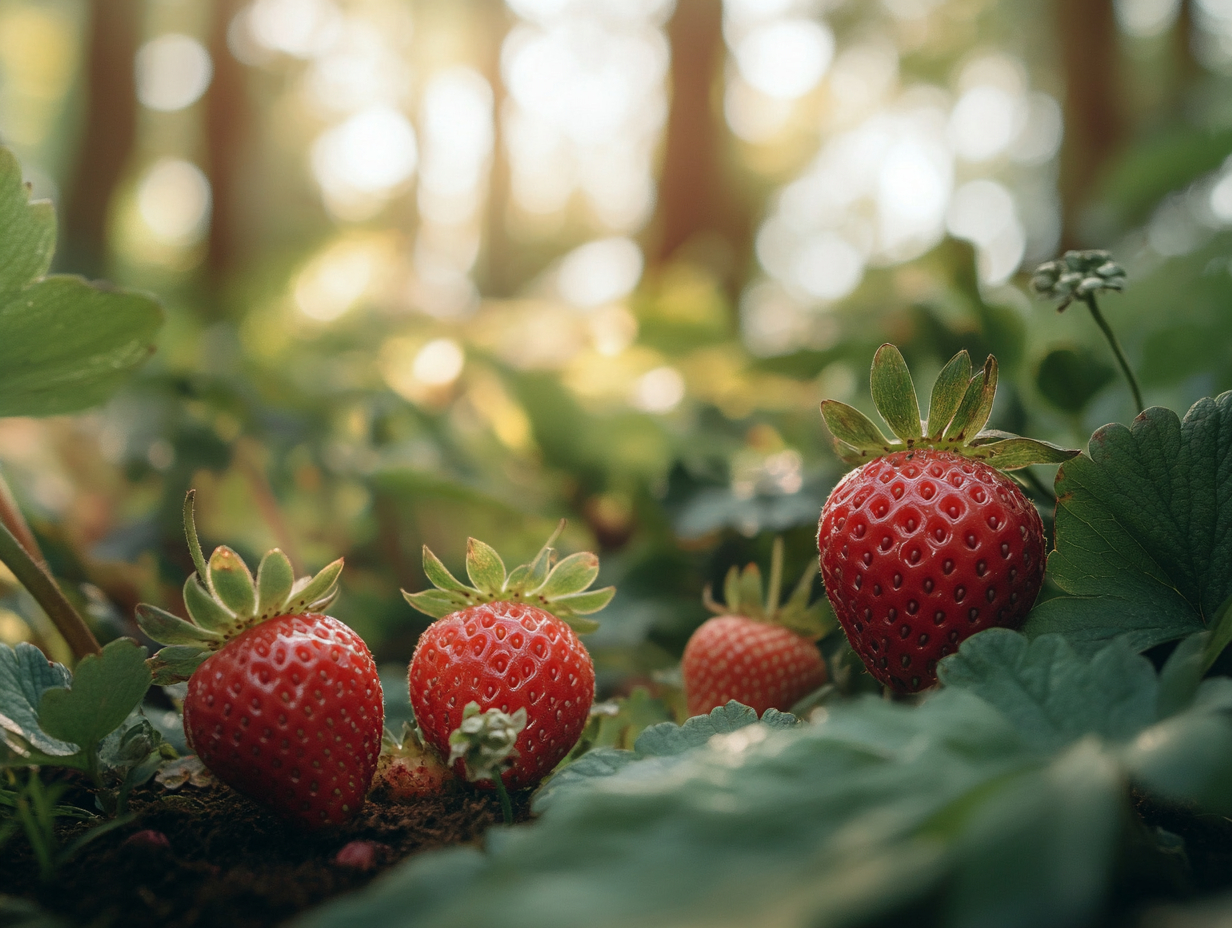
Strawberries
Learn all about growing tasty strawberries in your own garden. Receive extensive tips on soil preparation, sowing, maintenance and harvest, so that you can optimally enjoy a rich strawberry harvest.
With the right care and a well-prepared soil, you can enjoy an abundance of juicy, sweet strawberries in the Dutch climate. This comprehensive guide will help you step by step in choosing suitable varieties, planting, fertilizing, watering and protecting your plants, so that every season you can harvest healthy shrubs full of tasty fruits that will brighten up your garden and make your summers extra sweet.
Preparation and cultivation
Soil preparation for strong plants
Start with a light, well-drained soil that is rich in organic matter. Work compost or well-decomposed manure into the top layer in early spring to improve structure and replenish nutrients. Strawberries like slightly acidic soil with a pH between 5.5 and 6.5. Avoid wet areas where water remains, as this promotes root rot. By tilling the soil a few weeks before planting, you give soil life the opportunity to recover and you create a healthy basis for strong plants.
Choose the right varieties and planting time
Choose varieties that perform well in the Dutch climate, such as ever-bearing or single-bearing varieties, depending on your harvest wishes. Plant in spring or autumn, when the soil is moist but not too cold. Use sturdy, disease-free young plants and keep sufficient distance between rows for air circulation. By combining cleverly you can extend the harvest period and enjoy fresh strawberries from May until autumn.
Cultivation and care of young plants
After planting, regular watering is essential, especially in dry periods, so that the roots can develop properly. Keep the bed weed-free and place straw or wood chips around the plants to retain moisture and keep fruits clean. Check for snails and remove damaged leaves to prevent mold. During the growing season, provide light fertilization with potassium-rich nutrition for sturdy plants and rich flowering that forms the basis for an abundant harvest.
Planting and care
Plant strawberries in open ground
Plant strawberries preferably in spring or early summer, once the soil is well warmed and not too wet. Choose a sunny spot with airy, humus-rich soil and keep a distance of about thirty centimeters between the plants. Press the soil firmly around the roots and water immediately so that the roots make good contact with the soil. Avoid planting too deep, the heart of the plant should remain just above the ground to prevent rot and stimulate healthy growth.
Care during the growing season
Keep the soil moist but not soggy, especially during flowering and fruiting. Preferably water at the base of the plant in the morning to limit mold formation. Remove weeds and old leaves regularly to promote air circulation. A layer of straw or wood chips around the plants helps retain moisture and prevents fruits from lying on the ground. Check for snails and nematodes weekly and remove affected leaves immediately.
Nutrition and maintenance after harvest
After harvest, it is important to rejuvenate and nourish the plants. Cut away old leaves just above the heart and apply a light application of organic fertilizer to encourage new growth. Remove suckers that you do not want to use for propagation so that the energy goes to the mother plant. Check the cover and add mulch if necessary. In autumn you can protect the plants against frost with fleece cloth, so that they enter the winter strong and bloom profusely again next year.
Harvest and store
Determine the right harvest time
Strawberries are tastiest when they are completely red and easily detach from the crown. Check daily during peak season as ripe fruit can quickly become overripe or eaten by birds. Harvest in dry weather to prevent mold formation and use a bowl to avoid bruising. Pick with the crown on, so the berries stay fresh longer. By harvesting regularly you stimulate the plant to form new fruits and you significantly extend the harvest period, which ensures a longer supply of fresh strawberries.
Storing fresh strawberries
Fresh strawberries are fragile and only last for a few days. Place them in a single layer on paper towels in the refrigerator, without washing, so they don't get soggy. Only wash them just before use and remove the crown only afterwards to prevent loss of taste. If you want to keep them longer, freeze them on a baking tray and then place them in an airtight bag. This way you can enjoy your own harvest months later in smoothies or desserts, while retaining colour and aroma.
Process and extend shelf life
To make the most of the abundance of strawberries, you can process them into jam, syrup or compote. By briefly cooking the fruits with sugar and lemon juice you extend the shelf life and retain the summery taste. Drying or preserving is also a good option for those who want to use less sugar. Store processed strawberries in a cool, dark place and check regularly for spoilage. This way you can enjoy the taste of your own garden all year round, even in the middle of the winter months.
Strawberry plant Frigo Elsanta
Strong refrigerator strawberry plants of the Elsanta variety produce a high yield of firm, sweet fruits in the Dutch climate. These plants are ideal for planting in the spring for an early harvest and suitable for both open ground and pots on the balcony or terrace, where they bear fruit reliably, productively and for a long time with good care.
View productOrganic strawberry fertilizer
A slow-acting, organic fertilizer specially developed for strawberries ensures healthy growth, strong roots and rich flowering. Use this fertilizer in the spring and after harvest to strengthen the plants, improve fruit set, sustainably enrich the soil structure and increase resistance to diseases.
View productStrawberry fleece or berry protection net
A fine-mesh membrane or net protects ripening strawberries from birds, snails and hail without restricting air circulation. It helps keep the fruits clean and dry, prevents mold formation, extends the harvest period in changeable Dutch weather and is easy to attach over beds or containers.
View productRecipe inspiration

Strawberry tart
Wow family and friends with a stunning strawberry tart. A lovely centrepiece dessert for summer dining, it's made with homemade pastry and crème pâtissière
View recipe
Rustic strawberry tart
Try making your own shortcrust pastry with crunchy semolina. Top with juicy fruit and pinch the pastry round the edges to create a rustic finish
View recipe
Strawberry tart with lavender & honey cream
Delicate lavender and honey cream is the perfect accompaniment to a slice or two of this sumptuous summer dessert. Assemble the tart just before serving to prevent soggy pastry
View recipe